
EasyReal has installed, commissioned and put into operation a fully automatic triple-effect plate evaporation system for PT. PULAUMAS MOROMULIA in Indonesia. The system has a rated evaporation capacity of 6,000 L/h and is designed to produce coconut water concentrate.
The project combines three-phase disc centrifuge separation, vacuum evaporation, heat recovery, PLC/HMI control and CIP-compatible hygienic design. Concentrating coconut water near the raw-material source reduces transport and storage volume while creating a stable industrial ingredient for downstream beverage and food production.
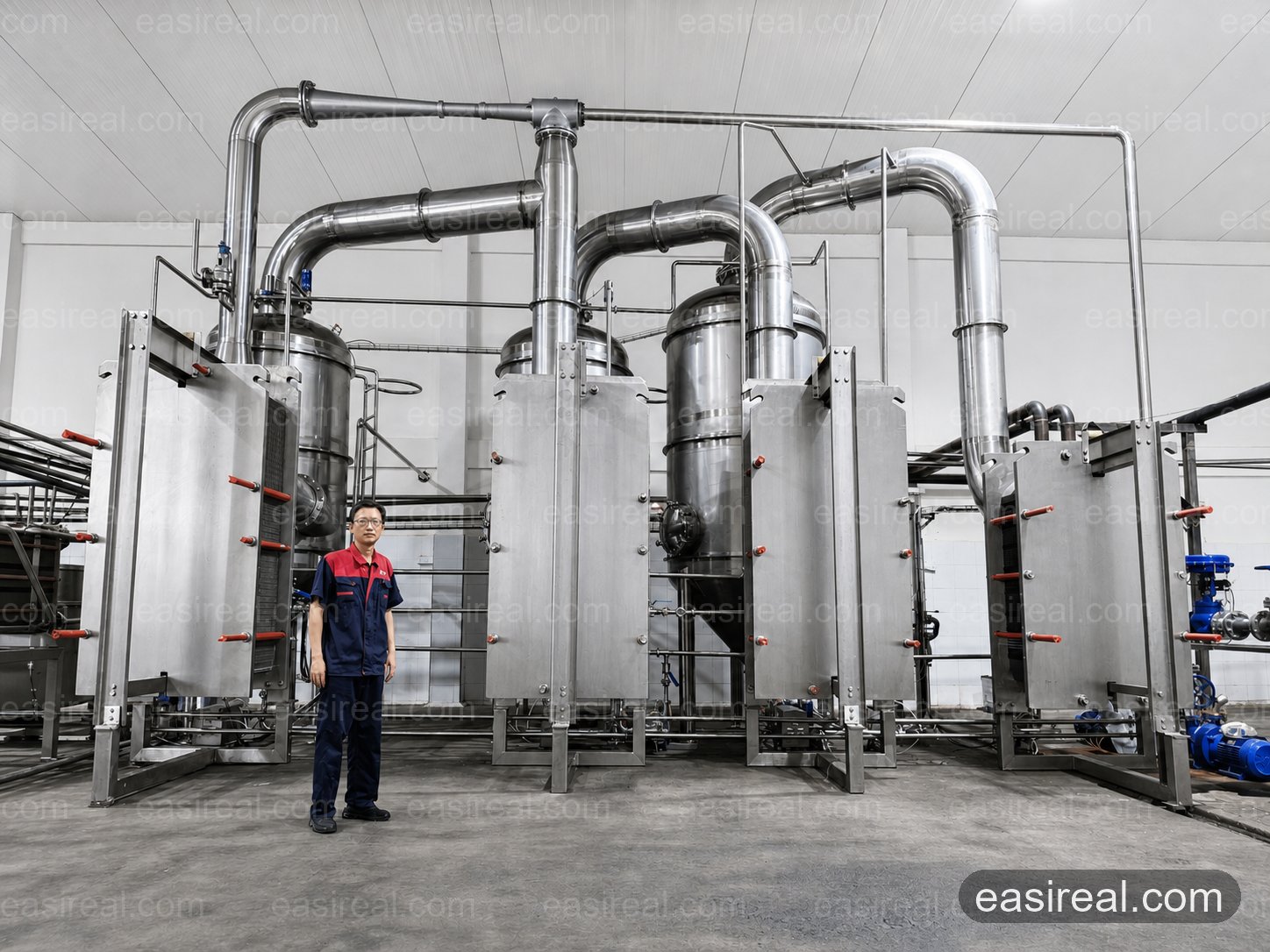
| Customer | PT. PULAUMAS MOROMULIA |
|---|---|
| Location | Indonesia |
| Raw material | Fresh coconut water |
| Final product | Coconut water concentrate |
| Rated evaporation capacity | 6,000 L/h |
| Core equipment | Triple-effect plate evaporator and three-phase disc centrifuge separator |
| Automation | Automatic PLC and HMI control |
| Project status | Installed, commissioned and in operation |
| Downstream packaging plan | 1-liter four-side-sealed sachets |
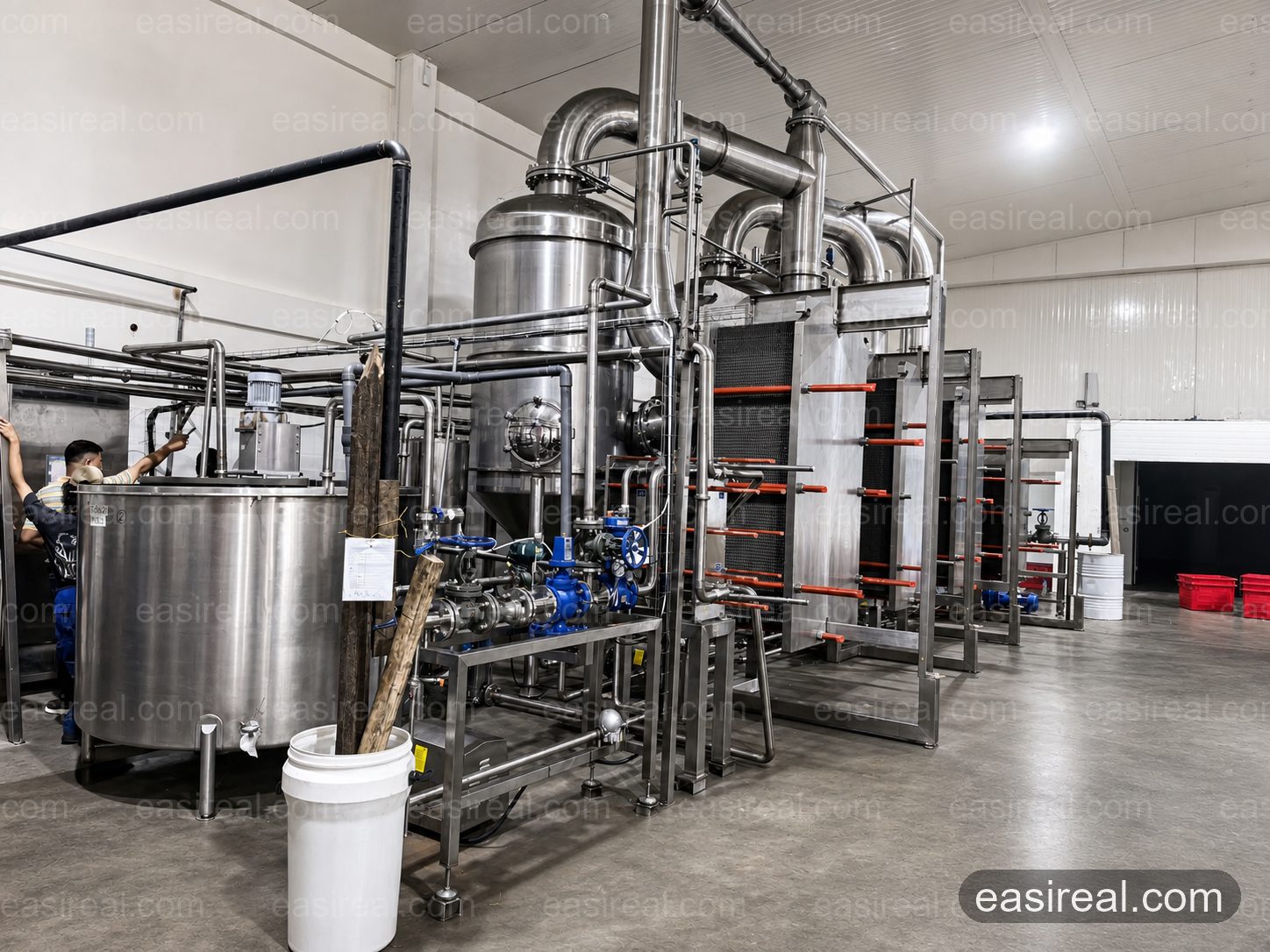
The customer required continuous coconut water processing with stable concentration, lower steam demand, short product residence time and hygienic operation. The line also needed to remove suspended particles, fine coconut solids and traces of oil before evaporation so that the plate heat exchangers could operate with less fouling.
EasyReal supplied the core separation and evaporation solution, integrating the three-phase disc separator with balance, preheating, evaporation, concentrate collection, automation and cleaning functions. The control platform monitors operating conditions such as inlet flow, evaporation temperature, vacuum, steam pressure, liquid level, product circulation, concentrate discharge, cleaning sequences, alarms and safety interlocks.
The planned downstream format is a 1-liter four-side-sealed sachet. Packaging, thermal treatment and storage parameters should be selected according to the required shelf life and the customer's final product specification.
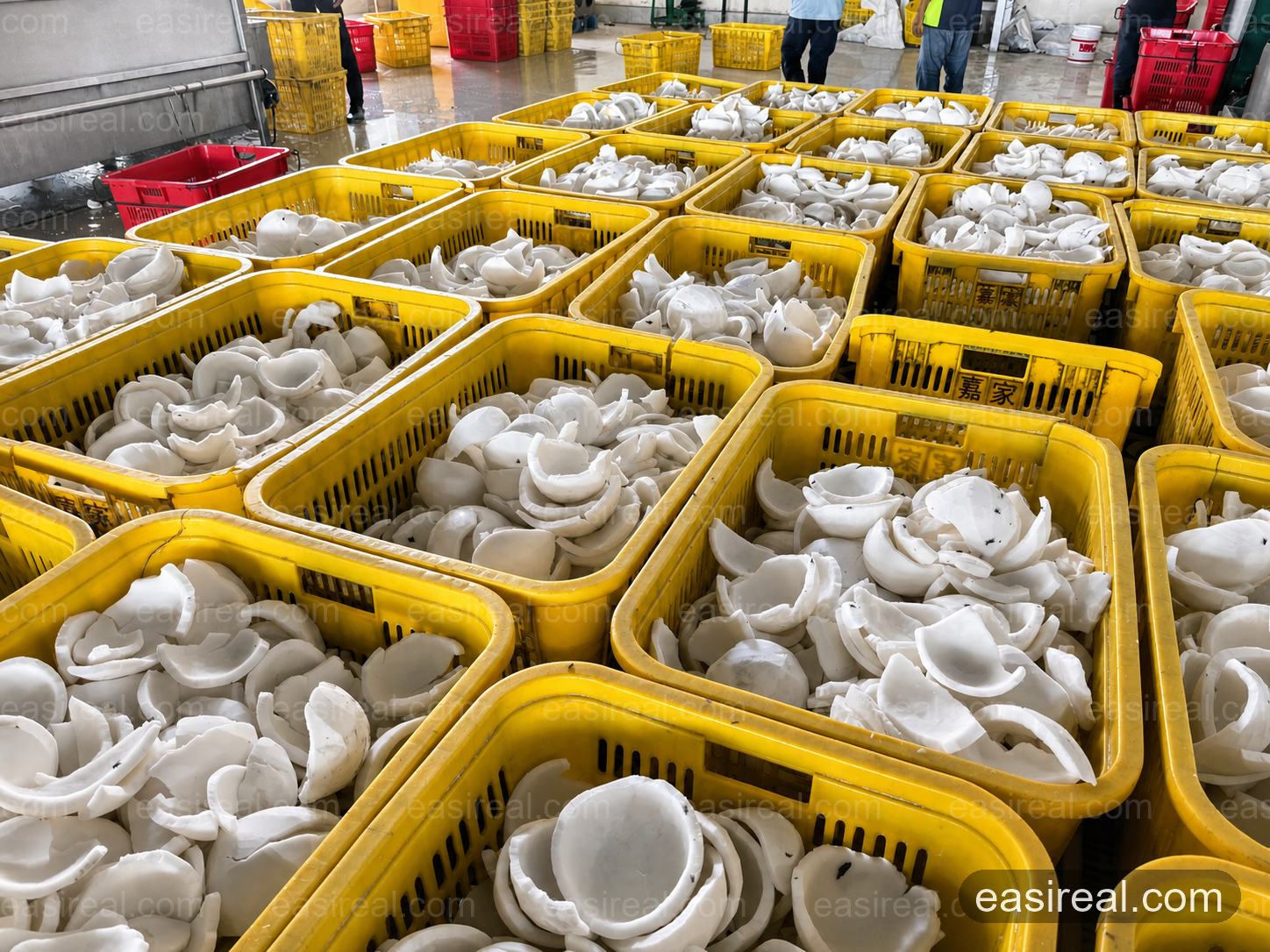
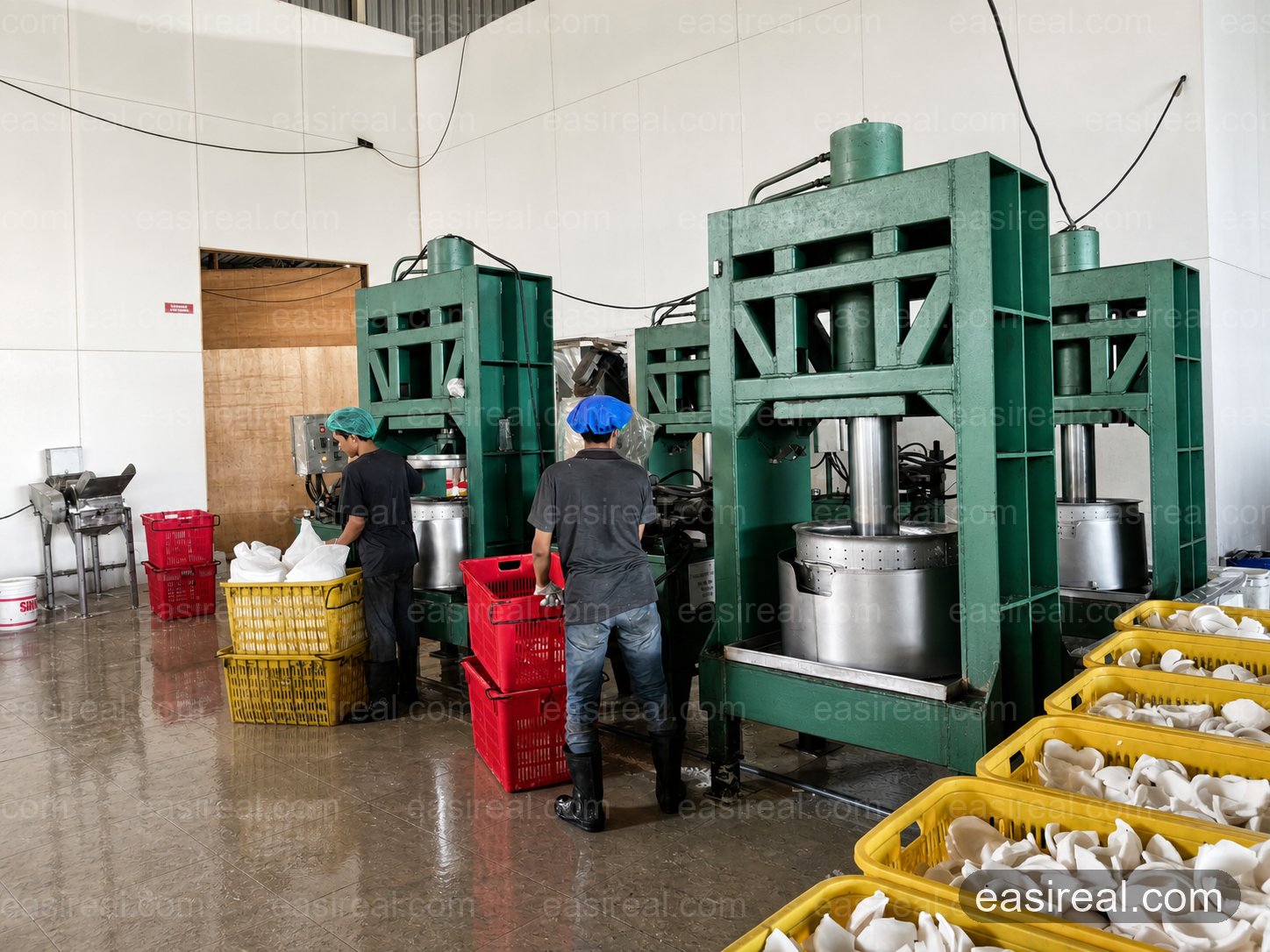
The following site photographs document coconut preparation activities at the same Indonesian facility. They provide production context for the raw-material operation; these preparation steps are separate from the coconut water evaporation sequence itself.
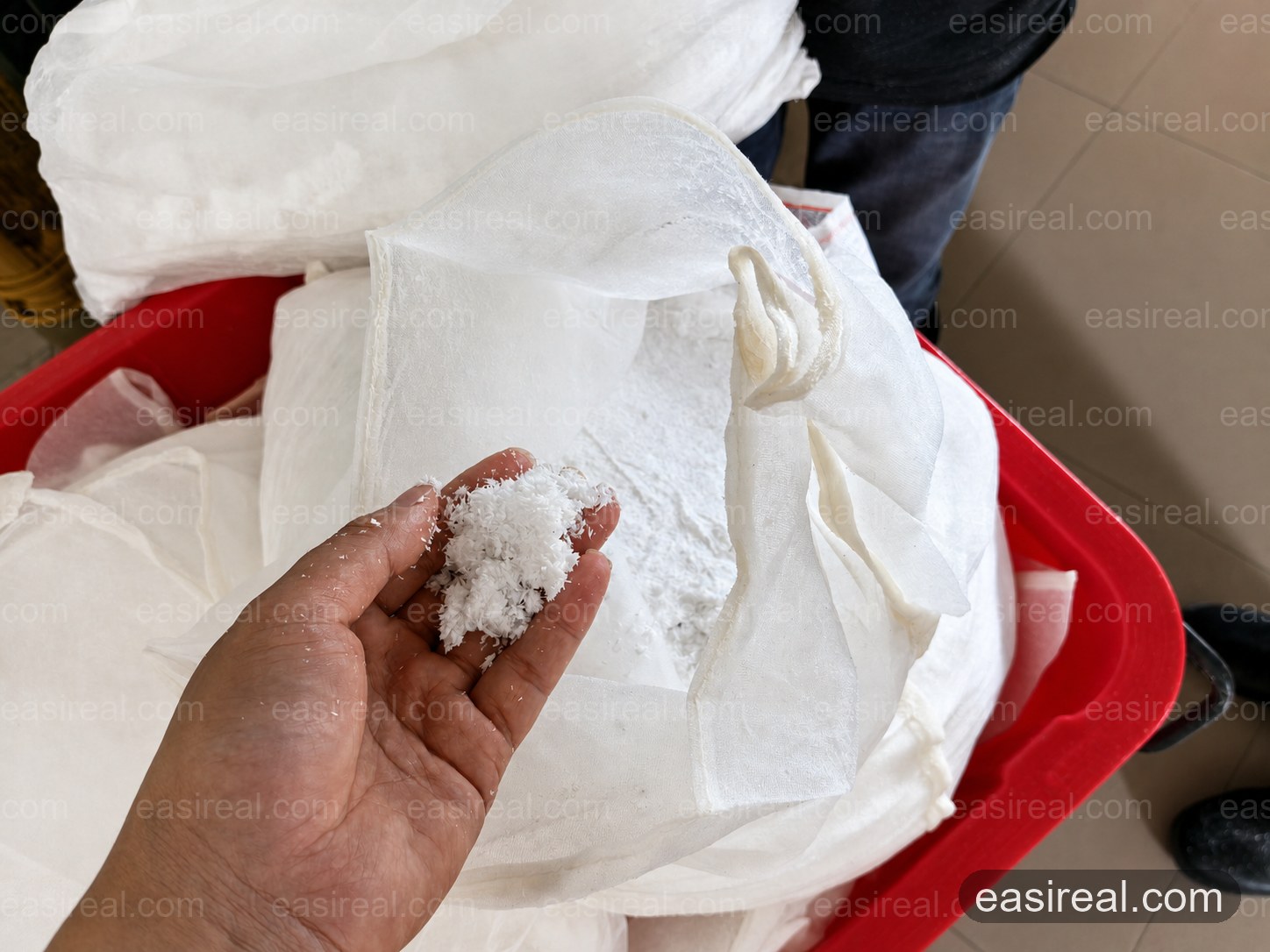
Fresh coconut water may carry small coconut particles, fibers, suspended solids and traces of oil. The three-phase disc centrifuge continuously separates phases by density before the liquid enters the evaporator. This improves feed clarity, protects pumps and valves, reduces heat-exchanger fouling and supports more consistent concentrate quality.
The separator can be integrated between the balance tank and evaporation section. Operating parameters are adjusted to the actual composition and solids load of the coconut water, allowing the aqueous phase to move forward under controlled conditions.
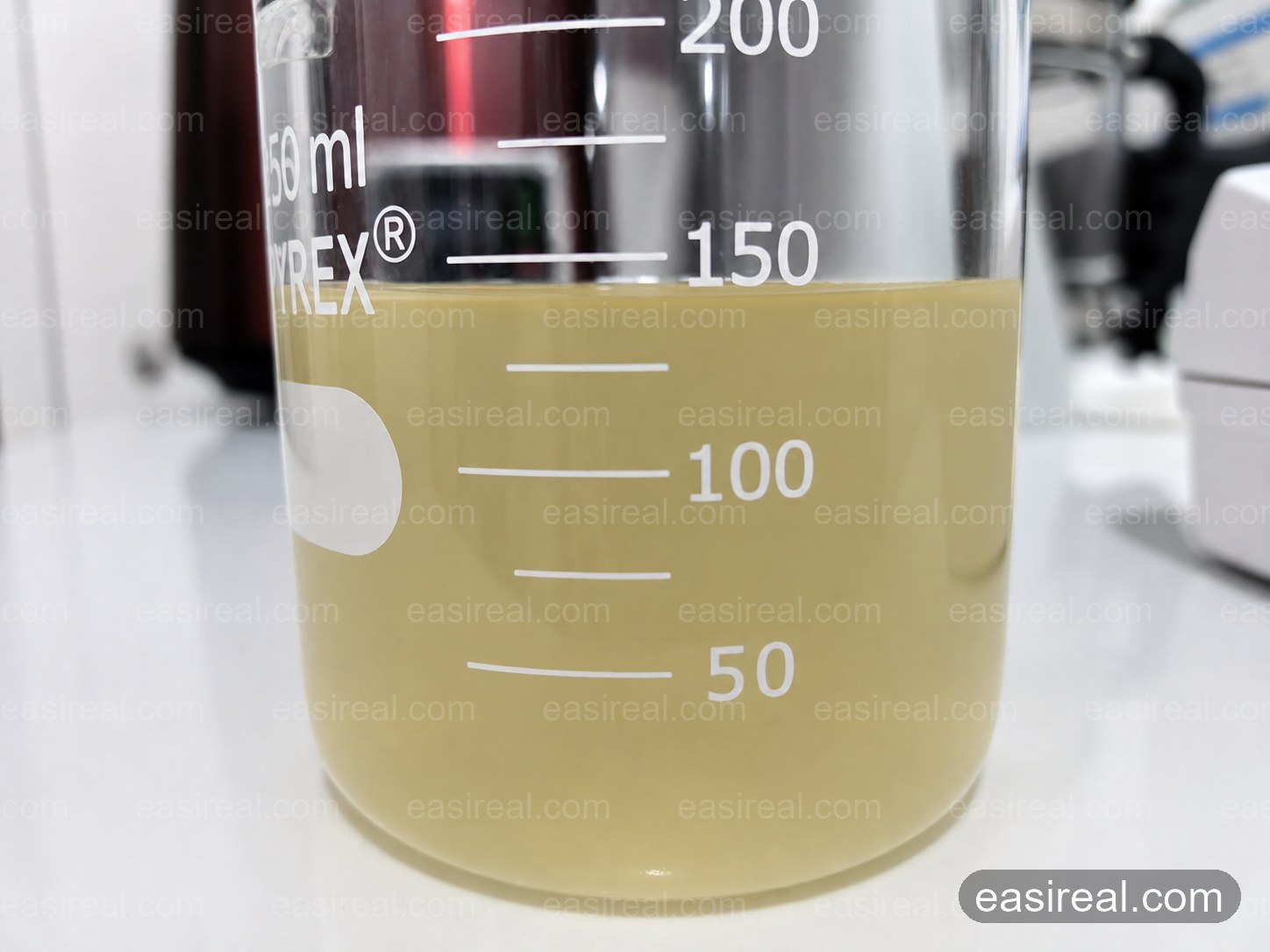
After separation, the clarified coconut water is preheated and enters the triple-effect plate evaporator. The system operates under vacuum, lowering the boiling temperature to limit unnecessary thermal exposure. Vapor generated in one effect is reused as the heating source for the next effect, improving thermal efficiency compared with single-effect evaporation.
The compact plate heat exchangers provide a large heat-transfer area and are well suited to clarified, relatively low-viscosity coconut water. Across the three effects, water is progressively removed until the product approaches the specified concentration.
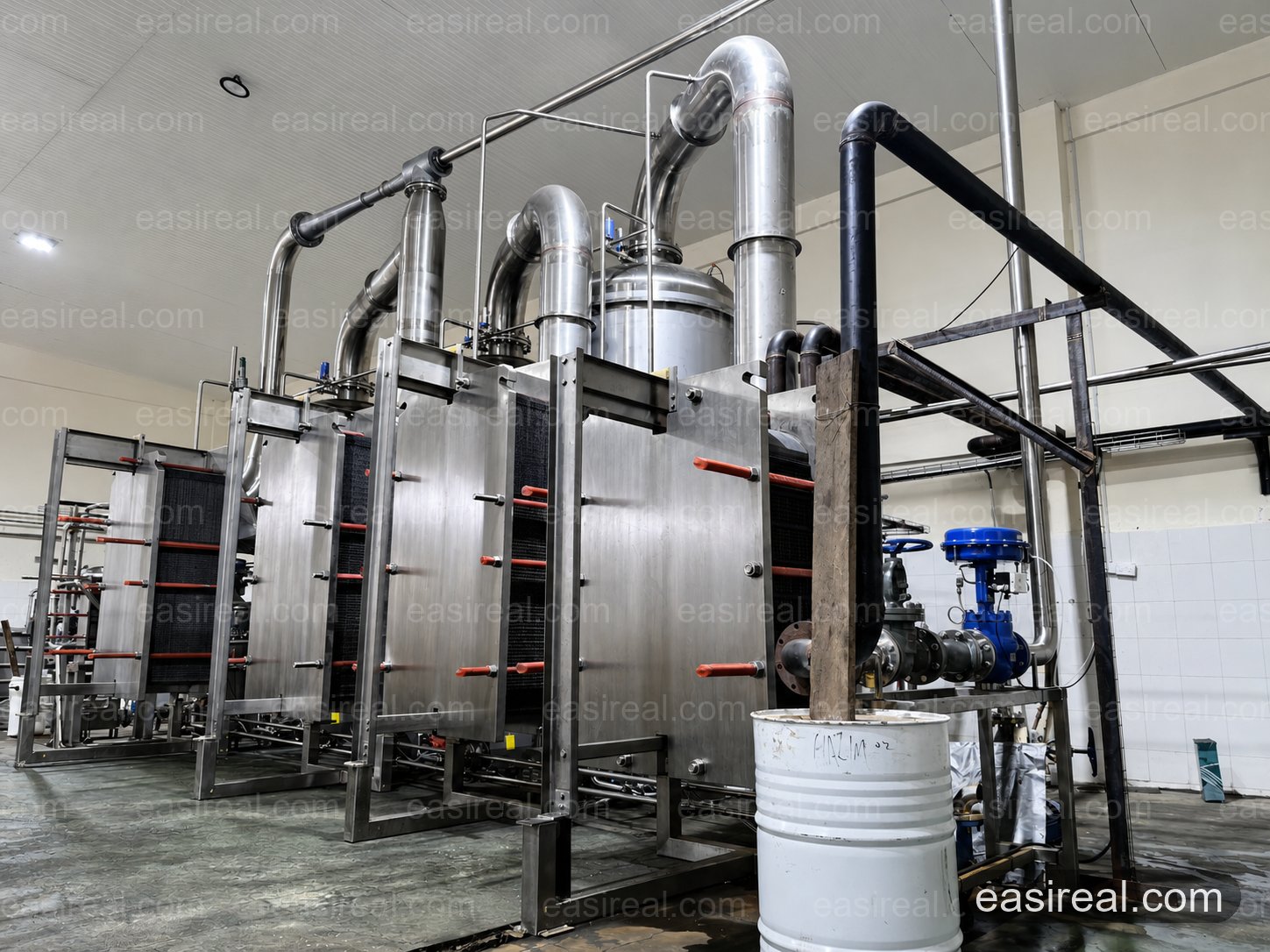
The typical process sequence is fresh coconut water reception → primary filtration → balance tank → three-phase disc separation → preheating → triple-effect vacuum evaporation → concentrate collection → cooling or buffer storage → downstream packaging.
The PLC and HMI provide centralized operation, parameter monitoring, alarm handling and safety interlocks. Depending on the selected control logic and instrumentation, operators can coordinate feed flow, steam input and concentrate discharge to maintain stable production.
Energy efficiency comes from secondary-vapor reuse across the three effects and from heat recovery between incoming product and outgoing process streams. Actual steam and cooling-water consumption depends on feed temperature, feed composition, required concentration, utility conditions and the selected recovery configuration.
Product-contact equipment uses hygienic construction and supports CIP circulation through tanks, sanitary pipelines, pumps, valves, heat exchangers, the separator and the evaporator. A typical cleaning program may include water pre-rinsing, alkaline circulation, an intermediate rinse, acid cleaning when required, a final rinse and sanitization before production. Final chemical concentration, temperature and time are set to the customer's sanitation standard and water conditions.
The complete system has been installed, commissioned and put into operation at PT. PULAUMAS MOROMULIA. It gives the customer an industrial route for converting fresh coconut water into a higher-value, lower-volume concentrate while combining clarification, vacuum evaporation, automated control and hygienic cleaning in one coordinated process.
Coconut water concentrate can be used in reconstituted coconut water, coconut-flavored drinks, juice and beverage formulations, dairy and plant-based beverages, frozen desserts, bakery and confectionery products, food-service ingredients and other industrial applications.
EasyReal can configure coconut water plate evaporation systems, multi-effect evaporators and complete coconut processing solutions around the feed condition, evaporation load, required concentration, available utilities, packaging plan and factory layout. Contact EasyReal to discuss a customized concentration project.
What does the 6,000 L/h rating mean?
It is the system's rated evaporation capacity: the designed water-removal load is 6,000 liters per hour under the specified operating conditions. It is not presented as the raw coconut water feed rate.
Why is a three-phase disc centrifuge used before evaporation?
It separates suspended coconut solids, fine particles and traces of oil from the aqueous phase, helping improve clarity, protect downstream equipment and reduce fouling in the plate evaporator.
How does triple-effect evaporation reduce energy consumption?
Secondary vapor from one effect is reused as the heating source for the next effect, so the system extracts more evaporation duty from the supplied thermal energy than a comparable single-effect arrangement.
How is the system cleaned?
A CIP-compatible circuit circulates rinse water and cleaning solutions through product-contact tanks, pipelines, pumps, valves, the separator and evaporation equipment according to the customer's validated sanitation program.
Post time: Jul-13-2026