
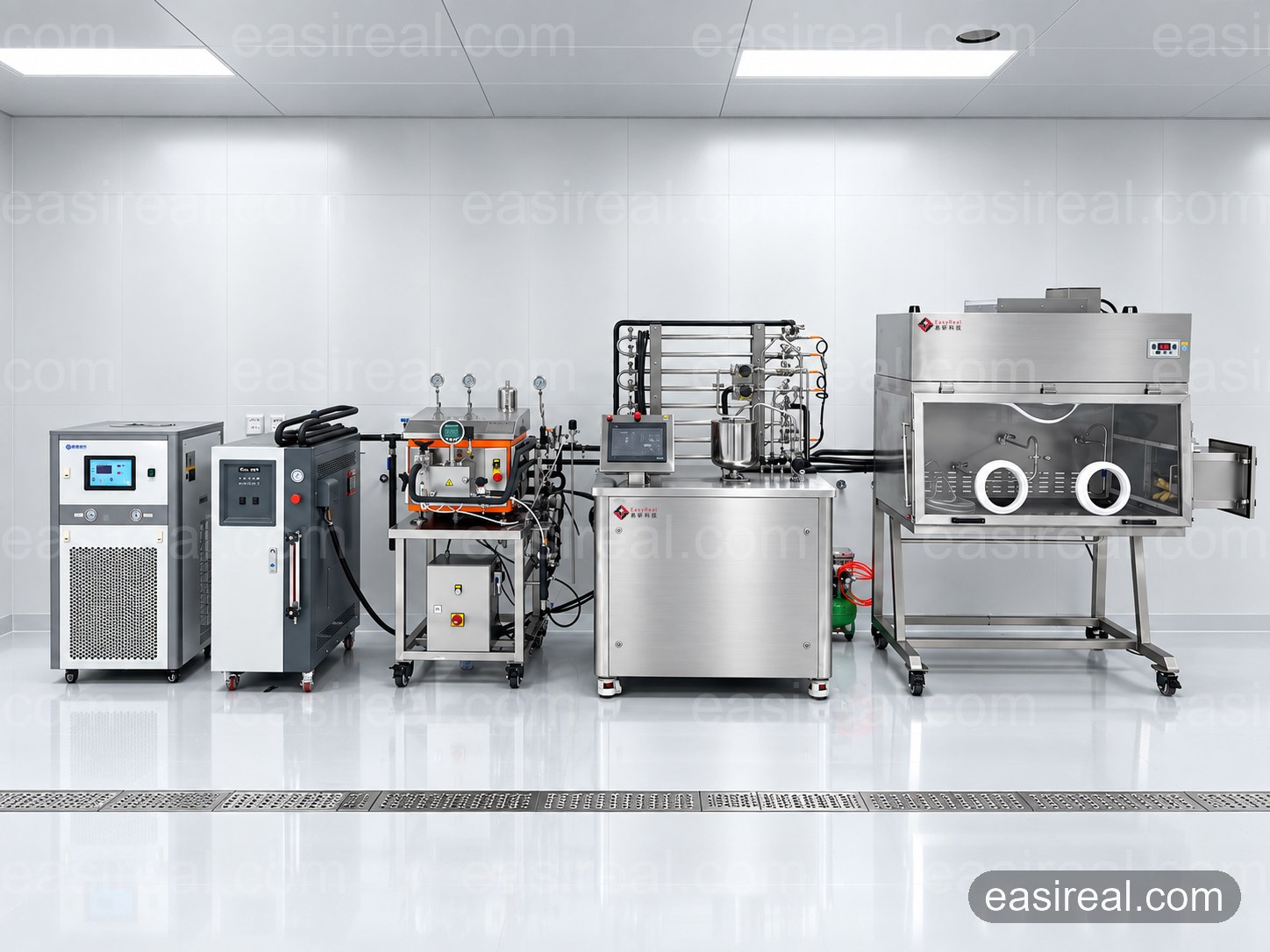
Hangzhou, China — March 2023. The Pilot UHT/HTST Plant for Tonicare E-Commerce (Hangzhou) Co., Ltd. (Wahaha) is configured for fluid-food experiments and formulation research and development. It brings tubular thermal processing, inline homogenization, aseptic sample filling, and supporting utilities together in one pilot-scale system.
A key feature is the ability to carry out both upstream inline homogenization and aseptic downstream inline homogenization. This gives the development team two process arrangements to consider when evaluating a formulation and its thermal-treatment route.
| Customer | Tonicare E-Commerce (Hangzhou) Co., Ltd. (Wahaha) |
|---|---|
| Country | China |
| Project date | March 2023 |
| System | Pilot UHT/HTST Plant |
| Purpose | Fluid-food experiments and formulation research and development |
| Main modules | Pilot Tubular Sterilizer, Inline Homogenizer, Aseptic Filling Cabinet, and Utilities |
| Homogenization configuration | Upstream inline homogenization and aseptic downstream inline homogenization |
The pilot tubular sterilizer is the thermal-processing section of the system. It provides a continuous processing path for UHT and HTST trials, helping the development team examine how a fluid-food formulation behaves during heating, holding, and cooling.
In pilot work, the thermal step is considered together with the rest of the process. A formulation's composition and flow characteristics guide the choice of trial conditions. The aim is to connect laboratory recipe development with practical processing studies.
Upstream inline homogenization places the homogenization step before the main thermal treatment. Aseptic downstream inline homogenization places it after thermal treatment within the aseptic processing path.
Having both arrangements available allows the team to compare process sequences for the formulation under development. The preferred route depends on the product and the question being investigated; the system configuration does not assume that one position is best for every fluid food.
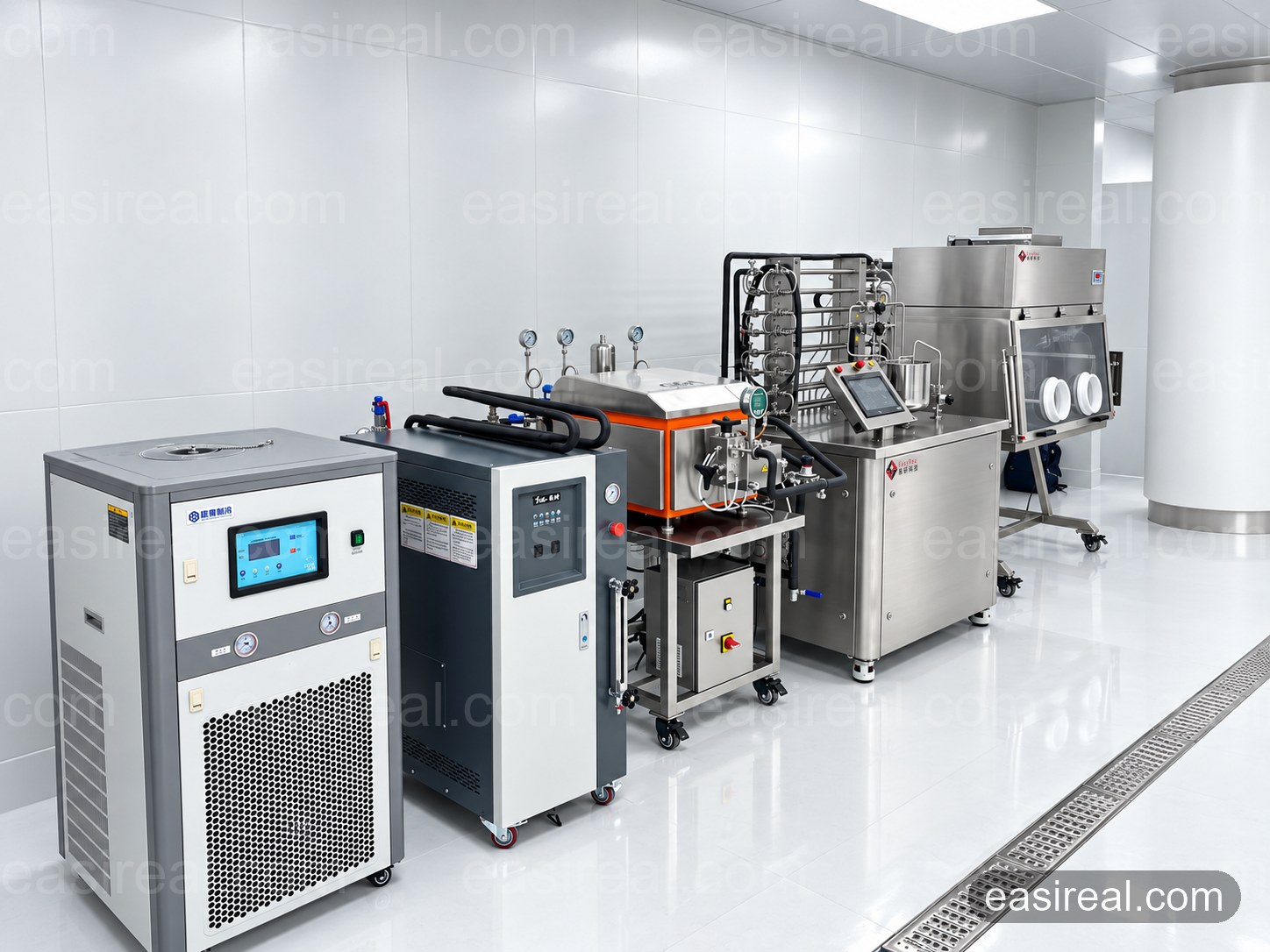
The aseptic filling cabinet provides the sample-filling section of the pilot line. It connects sample collection with the upstream thermal and homogenization stages, so product and process development can include filling considerations.
Supporting utilities serve the operating requirements of the equipment. Their integration is part of the overall pilot configuration, alongside the sterilizer, homogenizer, and filling cabinet.
The stated application is experimental work and formulation development for fluid foods. Trials can be planned around the recipe, thermal-treatment route, homogenization position, and sample-filling requirements. The two photographs show the equipment configuration used for this project.
For an R&D team, considering these stages together makes it possible to explore process choices alongside formulation changes. Any later production-scale design should be evaluated against the actual product and production requirements.
Explore EasyReal's lab and pilot UHT/HTST lines, or contact EasyReal to discuss a fluid-food development system with tubular processing, inline homogenization, aseptic filling, and supporting utilities.
What is the Tonicare (Wahaha) pilot plant used for?
It is configured for fluid-food experiments and formulation research and development.
Which modules are included?
The system includes a Pilot Tubular Sterilizer, Inline Homogenizer, Aseptic Filling Cabinet, and supporting Utilities.
Does the system support upstream and downstream homogenization?
Yes. The supplied configuration supports both upstream inline homogenization and aseptic downstream inline homogenization.
Post time: Mar-01-2023