


Tomato Processing Line | Paste, Sauce & Ketchup
A fully automated tomato paste processing line is the backbone of any efficient tomato paste manufacturing plant. Designed for high-volume, hygienic processing, this system transforms fresh tomatoes into a range of products—tomato paste, sauce, ketchup or juice—while reducing labor input and minimizing operational cost per kilo. Whether you're building a large-scale tomato paste production line or upgrading a mid-size tomato sauce manufacturing machine, every module is tailored for the physical behavior of tomato pulp, from fiber content to pectin activation and thermal sensitivity.
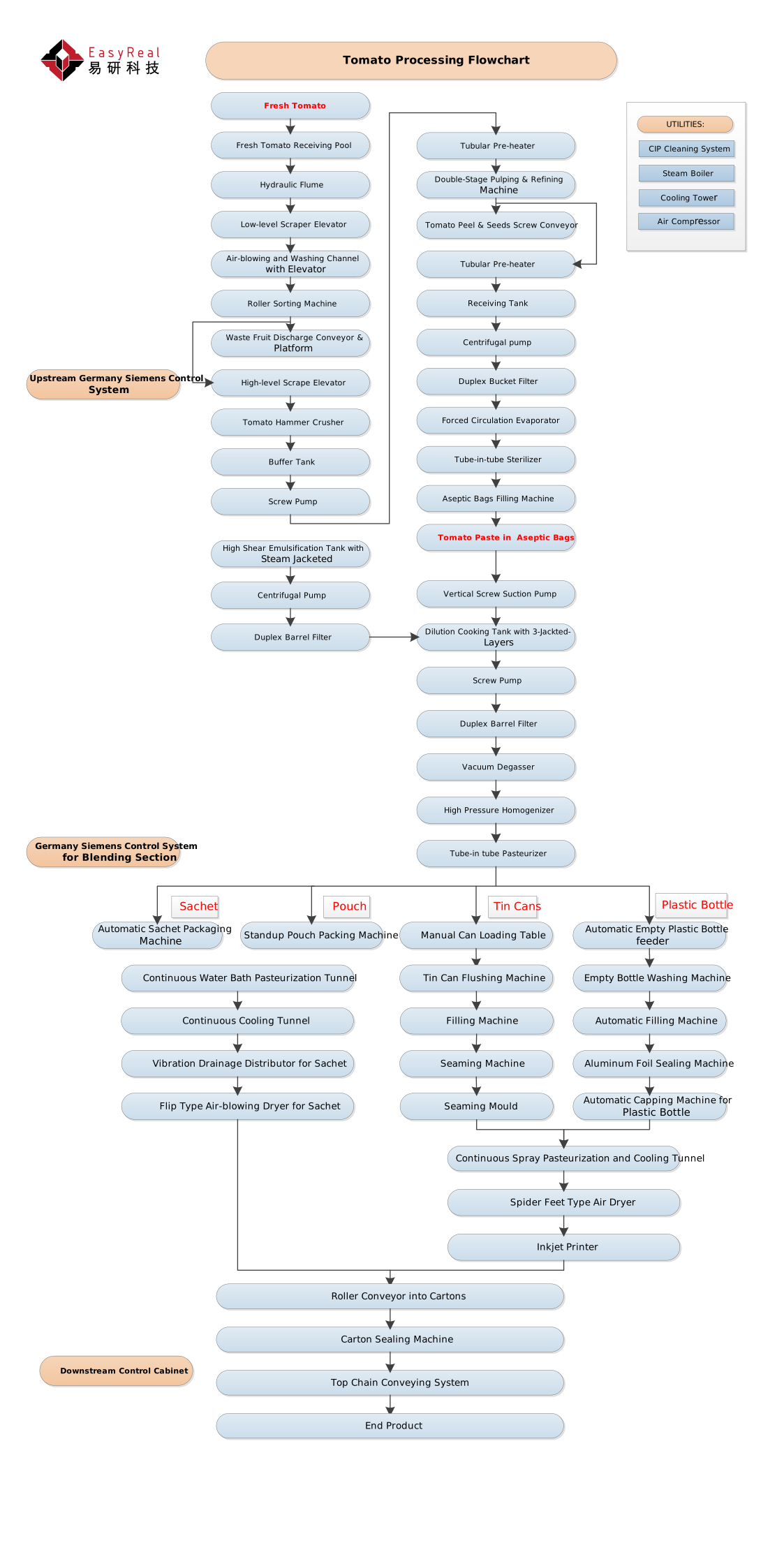
At the heart of a professional tomato processing plant, the system begins with a stainless-steel tomato receiving hopper and tomato elevator, feeding bulk tomatoes into a tomato washing and sorting unit. This ensures debris-free input and removes stones, leaves, and under-ripe fruits. Next, tomatoes enter a high-efficiency tomato crushing machine, preparing the crushed tomato for pulping and refining.
The crushed tomato then passes through a tomato refining machine—also known as a tomato puree making machine or tomato finisher—which extracts juice and pulp while discarding seeds and peels. This machine is essential in both a tomato paste processing plant and a tomato sauce production line, ensuring smooth texture and controlled pulp density.
Temperature control is critical for texture and yield. The system supports both hot-break (80-85°C) and cold-break (50–55°C) processing. In Tomato Paste processing plants or when making thick paste, hot-break is preferred to stabilize viscosity. For juice or light sauces, cold-break preserves aroma and color. These modes are easily toggled via PLC recipes and HMI presets.
For paste, the next step is concentration. The tomato paste multi-effect forced circulation evaporator (forced circulation design) raises Brix to 28–38° under vacuum. This unit alone determines a large portion of the tomato paste processing plant cost, so its efficiency and ease of cleaning directly impact ROI. Advanced models include MVR or TVR for energy savings—vital for producers monitoring tomato paste production line price.
Once concentrated, product passes through a tomato tube-in-tube sterilizer—ideal for high-viscosity fluids like tomato paste. UHT sterilization (108-110°C) ensures food safety without compromising taste or color. This is a must-have in any tomato paste production line or tomato sauce processing machine setup.
Final filling is handled by tomato paste aseptic filling machine for aseptic bag packaged in drum,or filling machine for pouch, sachet, tincan or bottle formats. Whether you're using a small-scale tomato sauce making machine or a fully integrated tomato ketchup manufacturing plant, sterile filling guarantees shelf-stable output. The entire path—from machine for tomato processing to packaging—is built for automated CIP cycles, rapid changeovers, and long service intervals.
Operators control all stages from a central HMI interface. With preset formulas for different SKUs—paste, puree, sauce, ketchup,juice—the line maintains flow, pressure, vacuum, and thermal setpoints with minimal manual input. As a result, one person can oversee the full system, even in a small scale tomato processing machine setup.
For factories comparing equipment, we provide full spec sheets, including tomato processing machine price, capacity ranges (0.5–20 TPH), and optional add-ons. Whether you're sourcing a tomato paste processing machine, a machine to make tomato sauce, or complete tomato processing equipment, our line is modular, scalable, and engineered to reduce downtime.

This tomato processing line is designed for:
• Agro-industrial plants handling seasonal harvests
• Private-label brands requiring SKU flexibility
• Export-focused processors targeting international shelf-stable goods
Compatible packaging formats include aseptic drums, pillow bags, glass jars, and PET bottles. Whether you're delivering a 38°Brix concentrate for B2B clients or a 5°Brix juice for direct retail, the line supports smooth changeovers and audit-compliant traceability.
As a result, processors benefit from fewer product complaints, more stable deliveries, and easier compliance with HACCP, FDA, and EU food safety frameworks.
Here’s how to specify your line:
• Capacity: Define daily throughput in tons of raw tomato × number of shifts
• Brix Targets: Paste often needs 28–38°Brix; sauce ranges from 12–24°; juice stays near 4.5–5.5°
• Heating Strategy: Choose hot-break for stable viscosity; cold-break for fresh flavor
• Evaporation: Required for paste and thick sauce; skipped for juice
• Filling Format: Aseptic bag packaged in drums for paste; tincans or bottles or pouches or sachets for retail sauce or ketchup
Pro tip: Start with pilot-scale validation. Adjust screen sizes, scraper speeds, and vacuum levels before scaling up. This ensures your formula holds in industrial conditions.
Each core process in the tomato line relies on specialized equipment designed for tomato viscosity, seed load, and concentration needs. Below are the key machines, their working principles, and their value in total operating cost (OPEX) and final product quality.
1. Tomato Receiving Hopper with Water Flume
• Gathers bulk tomatoes from field bins or trucks
• Uses flowing water to transport tomatoes gently into the line
• Minimizes mechanical bruising and early spoilage risk
2. Tomato Washing and Air-Lift Separation System
• Bubble washer + air-lift separator for removing dirt, leaves, and stones
• Pre-filters debris before mechanical processing
• Reduces contamination risk, supports CIP sanitation
3. Tomato Crushing Machine
• Breaks tomatoes into fine slurry using rotary blades
• Prepares pulp for refining while preserving soluble solids
• Adjustable particle size via blade-speed controls
4. Tomato Pulping Machine (Pulper/Finisher)
• Centrifugal sieves separate skins, seeds, and fiber
• Delivers smooth, uniform pulp
• Screen mesh can be swapped based on final product (juice vs paste)
5. Tomato Tubular Preheater
• Apply hot- or cold-break based on final product
• Gel-forming pectins needing inactivation
• Softening the pulp increases the yield of pulp or juice.
6. Tomato Multi-Effect Evaporator (Forced Circulation)
• Raises Brix to desired level under vacuum conditions
• Circulation prevents burn-on and supports continuous operation
• Energy-saving with thermal vapor recompression (TVR/MVR)
7. Tomato Tube-in-Tube Sterilizer
• Tube-in-tube heat exchanger for fast thermal treatment of viscous tomato products
• Preserves color and taste; UHT compatible
• CIP capable with temperature/pressure interlocks
8. Tomato Aseptic Filling Machine (BIB/BID)
• Steam-sterilized nozzles and enclosed sterile chamber
• Suitable for paste, sauce, and juice formats
• Ensures shelf-stable packaging with zero post-fill contamination
Each module contributes to production uptime, yield consistency, and shelf-life stability—ultimately lowering cost per kilo and increasing buyer confidence.


Tomato processing is inherently seasonal. This system accepts a wide range of raw materials:
• Fresh tomatoes (field-picked, mechanically harvested)
• Frozen or cold-stored tomatoes (thawed inline)
• Aseptic semi-finished tomato pulp (for remix or secondary concentration)
With one line, processors can switch between:
• Tomato paste (28–38°Brix) – for institutional or foodservice customers
• Tomato sauce/ketchup (12–24°Brix) – ready-to-eat or mixed with flavorings
• Tomato juice (5–8°Brix) – bottled for direct retail or chilled chain
Changeovers are simplified by recipe memory, quick-clean valves, and CIP automation. This agility protects against tomato price fluctuations and allows rapid response to contract SKUs or market trends.
The line’s digital backbone is a PLC-HMI control system engineered for food processing:
• Preloaded tomato-specific PLC recipes: hot-break vs cold-break, paste vs sauce
• Setpoint control for vacuum, temperature, holding time, and flow rate
• Touchscreen HMI dashboards for live status, trend graphs, and alarms
• Interlocks to prevent operator error during transitions
• Full batch ID traceability: auto-logged for audits or product recalls
• Remote diagnostics and support via Ethernet or VPN gateway
• Modular firmware for optional integration with MES or SCADA systems
With smart automation, one trained operator can supervise an entire 5–8 ton/hour tomato line. That means more throughput, less guesswork, and traceable performance from tank to tote.
We help you move from concept to production:
• Define throughput, Brix targets, and product types
• Get layout drawings, utility lists, and P&ID based on your footprint
• Select preferred packaging: drum, bag, bottle, pouch
• Run a pilot batch to validate tomato variety, screen size, evaporation rate
• Receive your turnkey line, with startup support and team training
• Get spare parts and remote support for the first season—and beyond
Submit your application today or schedule a discovery call with our tomato processing specialist.


