

Lab-Scale Carbonated Beverage Filling Machine for Beverage R&D
EasyReal lab carbonated beverage R&D equipment is a compact small-scale system for cooling, CO₂ carbonation, differential-pressure / counter-pressure filling and capping. It is designed for beverage laboratories, pilot plants, universities, ingredient suppliers and beverage manufacturers that need to develop carbonated drinks, prepare sealed samples and evaluate carbonation performance before industrial scale-up.
Compared with a household soda maker or a manual keg-based test setup, this system is built for repeatable R&D work. Operators can control product temperature, pressure, CO₂ mixing time, filling volume and cleaning parameters through a Siemens PLC and HMI interface. The system can store up to 50 process scenarios, record key production data and export data through USB for formulation tracking and process comparison.
The standard configuration supports small-batch beverage trials with a 20L material tank, CO₂ content up to 11g/L, CO₂ control repeatability of ±0.3g/L, filling accuracy within 5ml, integrated bottle vacuum extraction, standard CO₂ bottle flushing, CIP cleaning and 316L product-contact parts. PET bottles, glass bottles and can formats can be evaluated according to the selected mold, closure and external seaming configuration.
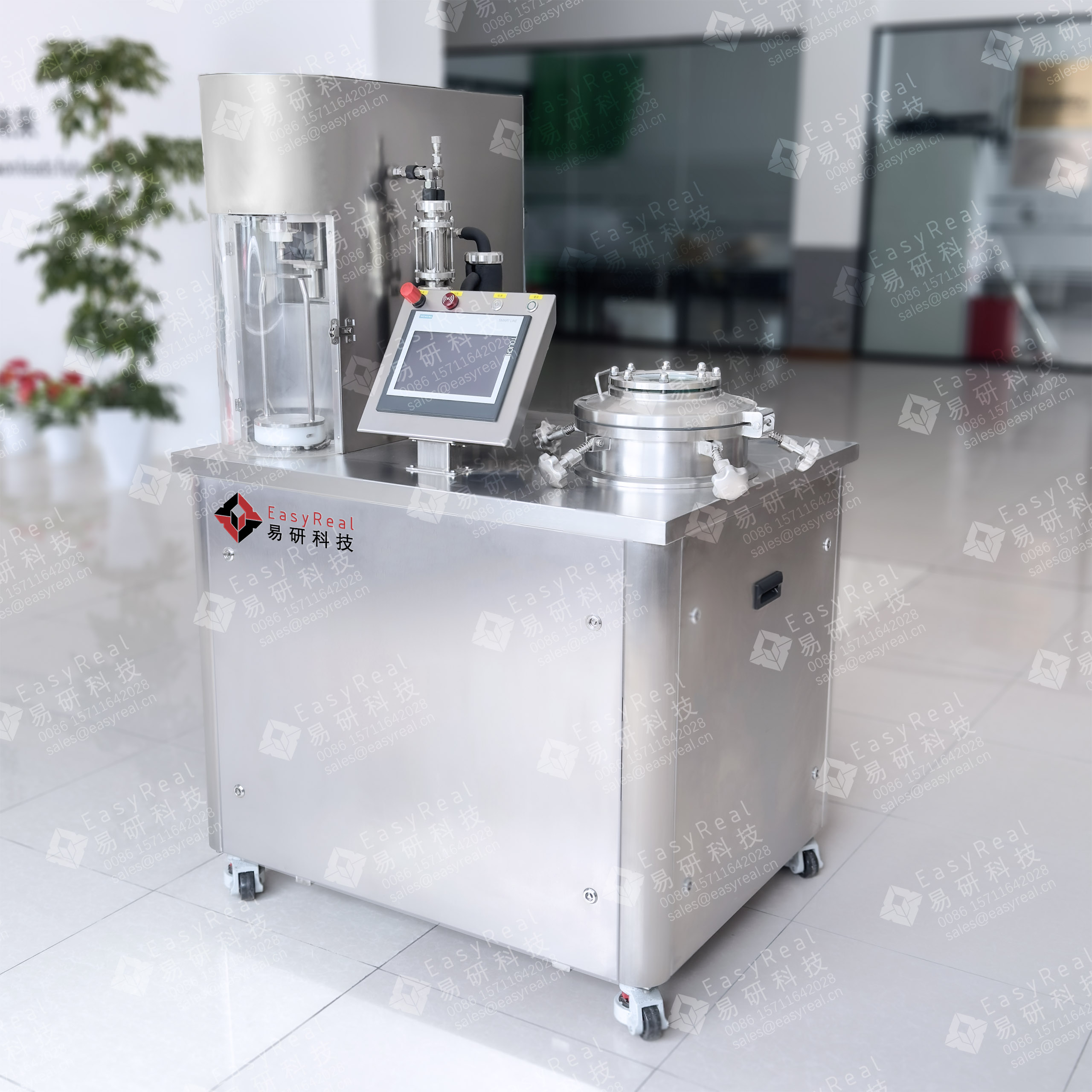
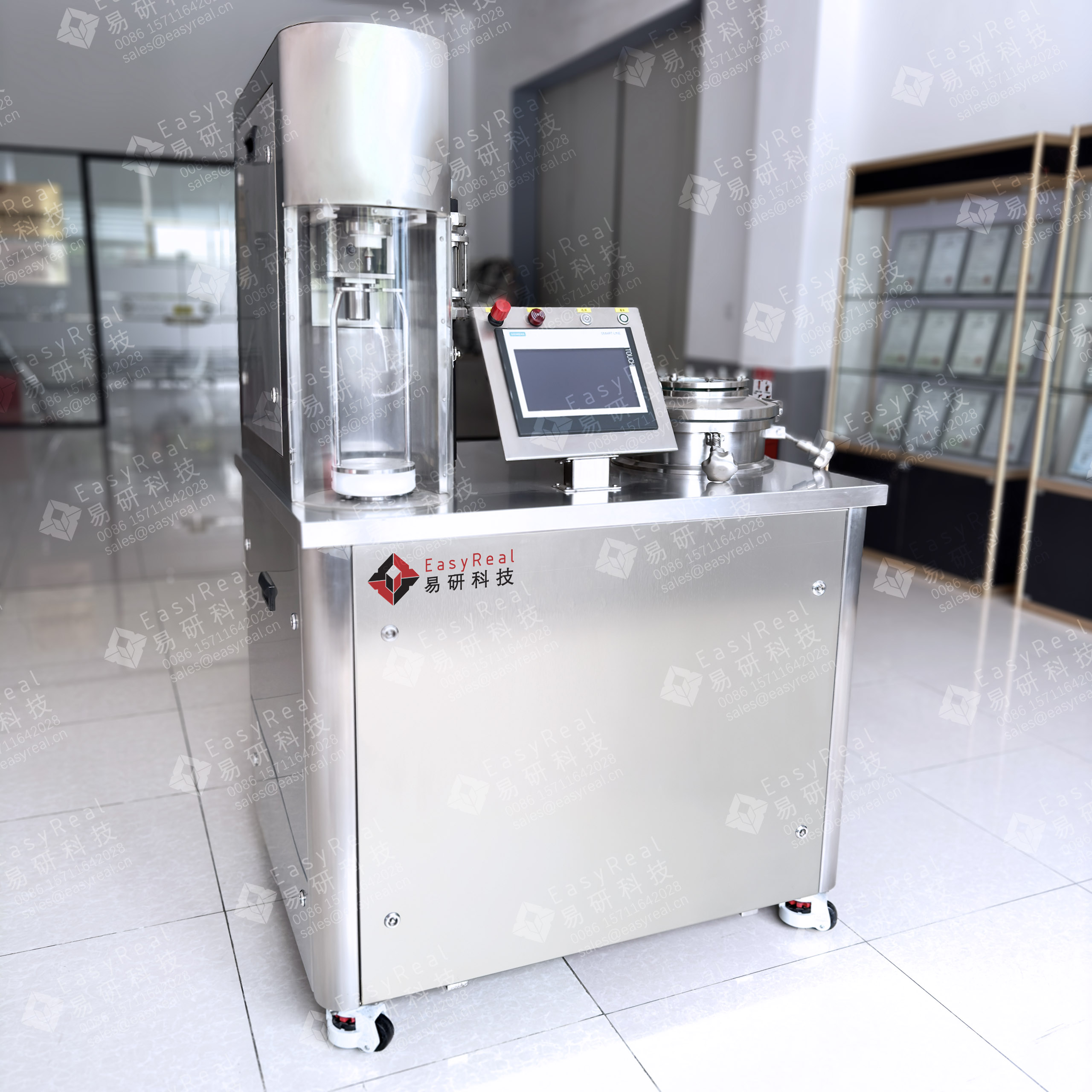
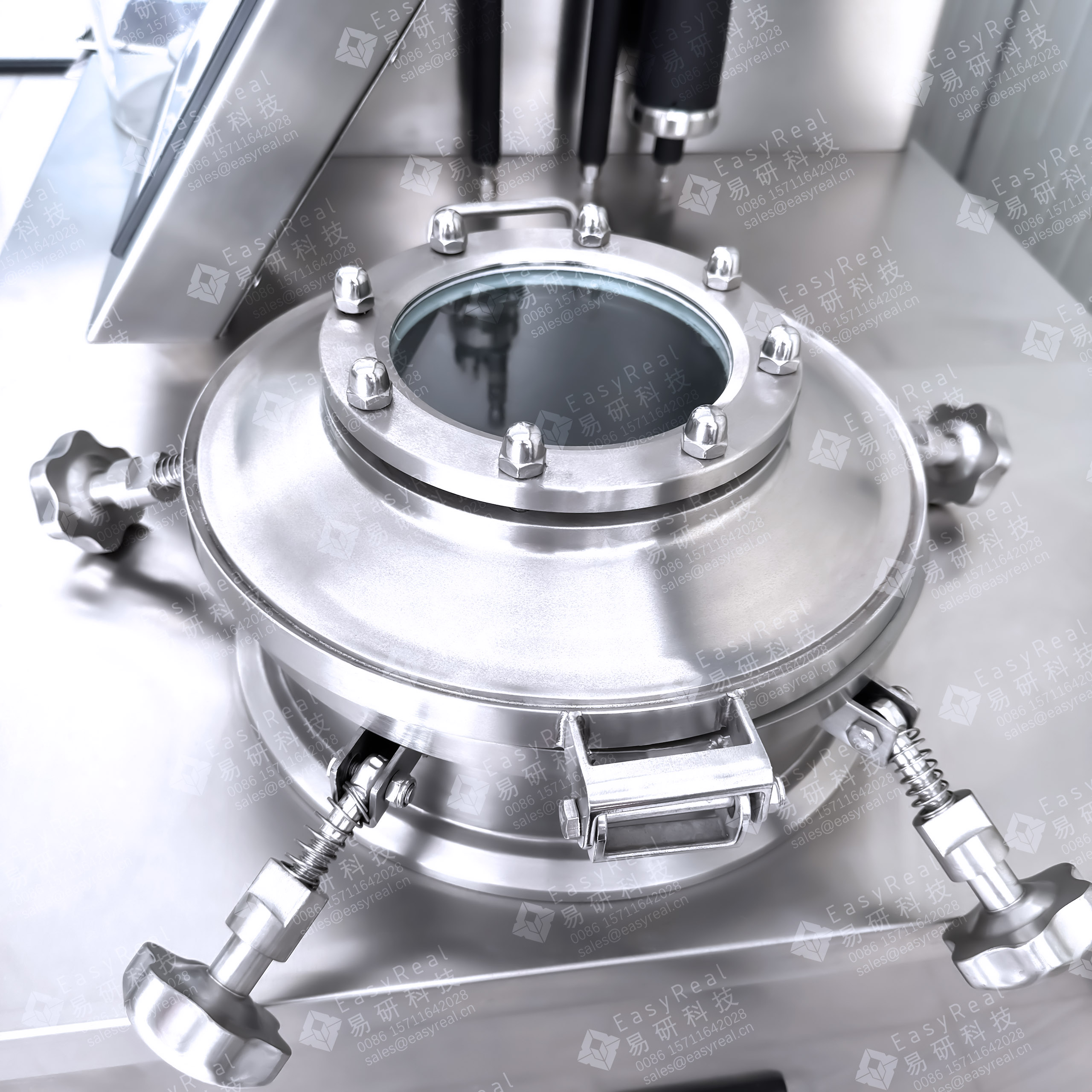
Carbonated beverage development is not only about injecting CO₂ into water. A professional R&D process must control the relationship between product temperature, CO₂ pressure, carbonation time, filling sequence, foam behavior, packaging format and sealing result. If these variables are not controlled, a formula that tastes good in a small manual test may fail during bottled sample preparation or later pilot-scale validation.
EasyReal’s lab carbonator filler helps R&D teams move from simple flavor screening to controlled sample production. It is suitable for preparing samples for internal sensory panels, distributor presentation, investor demonstration, packaging evaluation, shelf-life observation and process scale-up studies.
| R&D Stage | Typical Requirement | How EasyReal Supports It |
| Formula screening | Compare sweetness, acidity, flavor and CO₂ mouthfeel | Supports different CO₂ gradient tests by adjusting pressure and temperature. |
| Carbonation validation | Control CO₂ level and product temperature | CO₂ up to 11g/L, approximately 5.6 vol/vol, with ±0.3g/L repeatability under defined process conditions. |
| Bottled sample preparation | Reduce foam and CO₂ loss during filling | Differential-pressure / counter-pressure filling sequence with CO₂ flushing, pressurization, filling, pressure release and sealing. |
| Packaging test | Evaluate PET, glass bottle or can sample formats | Standard PET/glass compatibility; can filling can be evaluated with an external can seamer. |
| R&D traceability | Repeat the same process conditions | Siemens PLC + HMI, up to 50 stored scenarios, batch data recording and USB export. |
| Item | Configuration / Data |
| Machine type | Lab-scale carbonated beverage R&D equipment for cooling, carbonation, filling and capping |
| Application | Sparkling water, soda, carbonated juice, beer, dairy-based drinks, functional drinks and other beverage trials |
| Material tank | 20L per batch |
| CO₂ content | Up to 11g/L; approximately 5.6 vol/vol |
| CO₂ repeatability | ±0.3g/L under defined test conditions |
| CO₂ control method | Pressure setting through HMI, PLC automatic control |
| Cooling method | Built-in ice-water chiller |
| Recommended carbonation temperature | 4–6°C |
| Minimum product temperature | 4°C |
| Temperature control accuracy | ±1.5°C |
| Cooling time reference | About 20 minutes to cool 15L product to 4°C when ambient temperature is below 30°C |
| Filling accuracy | <5ml |
| HMI / PLC | Siemens PLC and HMI |
| Recipe / scenario storage | Up to 50 groups |
| Data record | Temperature, pressure, filling time and batch data can be recorded; USB export supported |
| Product-contact material | 316L stainless steel |
| Seal materials | Fluororubber / silicone rubber / nitrile rubber according to configuration |
| CIP | Standard CIP by manually adding heated cleaning solution; optional self-heating CIP configuration |
| Warranty | 15 months from shipment or 12 months from acceptance |
The system supports CO₂ content control up to 11g/L, which is approximately 5.6 volumes of CO₂. This range allows R&D teams to compare light, medium and strong carbonation profiles for sparkling water, soda, fruit-based carbonated drinks, beer, fermented beverages and functional beverages.
CO₂ control is achieved by setting the pressure through the touch screen. The PLC automatically controls the process, and different CO₂ gradients such as 5g/L, 7g/L and 9g/L can be tested by adjusting temperature and pressure. The CO₂ repeatability is ±0.3g/L under defined process conditions.
CO₂ content is checked by measuring temperature and pressure and referring to a CO₂ solubility table. For formal R&D validation, users are recommended to record product temperature, pressure, carbonation time, target CO₂ level, actual CO₂ level, bottle type and foam behavior for each batch.
CO₂ Data to Record During R&D Trials
| Parameter | Why It Matters |
| Target CO₂ level | Defines the expected bubble strength and mouthfeel. |
| Product temperature | Directly affects CO₂ absorption and foam during filling. |
| Pressure setting | Determines carbonation intensity and filling stability. |
| Carbonation / mixing time | Affects whether the target CO₂ level can be repeated. |
| Actual CO₂ result | Helps compare formula versions and scale-up conditions. |
| Foam behavior | Shows whether the product can be filled and sealed reliably. |
Temperature control is one of the most important variables in carbonated beverage development. A colder product usually helps improve CO₂ absorption and reduce unstable foam during filling. The EasyReal system uses a built-in ice-water chiller to cool the product before carbonation and filling.
The recommended carbonation temperature is 4–6°C, with a minimum product temperature of 4°C and temperature control accuracy of ±1.5°C. As a reference, when the ambient temperature is below 30°C, 15L of product can be cooled to 4°C in about 20 minutes. The HMI displays the product temperature so that operators can monitor and record the process conditions for each test batch.
For carbonated juice, tea drinks, beer, dairy-based beverages and formulas with plant extracts or stabilizers, product temperature should be recorded together with CO₂ level and filling pressure. This helps the R&D team understand whether foam, CO₂ retention or filling volume changes are caused by formula changes or process conditions.
Oxygen control is especially important for tea drinks, juice-based carbonated beverages, botanical drinks, vitamin drinks, coffee beverages and other oxygen-sensitive formulas. Oxygen exposure may affect color, aroma, flavor stability and shelf-life evaluation. For this reason, oxygen management should be considered during both carbonation and filling trials.
The EasyReal system includes a built-in vacuum generator and supports bottle vacuum extraction before filling. CO₂ bottle flushing is included in the standard configuration to help reduce air inside the container before product filling. Product deaeration before carbonation, nitrogen protection and nitrogen connection can be customized as optional configurations according to the beverage type and shelf-life target.
For products that require stricter dissolved oxygen control, users should provide the target DO requirement, product formula, packaging format and expected storage test conditions before quotation. EasyReal can then evaluate whether upstream deaeration, bottle vacuum extraction, CO₂ flushing, nitrogen protection or other low-oxygen process configurations are suitable for the project.
| Function | Standard / Optional Status | R&D Value |
| Built-in vacuum generator | Standard | Supports bottle vacuum extraction before filling. |
| Bottle vacuum extraction | Supported | Helps reduce oxygen inside the container before filling. |
| CO₂ bottle flushing | Standard | Helps replace air inside the bottle with CO₂ before filling. |
| Product deaeration before carbonation | Optional customized configuration | Useful for oxygen-sensitive formulas. |
| Nitrogen protection / nitrogen interface | Optional customized configuration | Useful for non-carbonated or low-oxygen beverage filling tests. |
Foam control is one of the biggest challenges in carbonated beverage sample preparation. Excessive foam can cause unstable filling volume, product loss, cap sealing problems and lower CO₂ content in the final sample. EasyReal’s filling process is designed for low-foam sample preparation by using a differential-pressure / counter-pressure filling sequence.
The complete process includes CO₂ flushing, container pressurization, product filling, pressure release and sealing. These steps are included in the machine program. Key process values such as product temperature, pressure, CO₂ mixing time, filling volume, cleaning time and cleaning cycles can be set through the HMI. Detailed program parameters such as flushing time, pressurization pressure, filling pressure, filling time, pressure release time, capping step and balance time can be configured according to the project requirements.
| Process Step | Purpose |
| CO₂ flushing | Reduces air inside the container and prepares the bottle for carbonated filling. |
| Container pressurization | Balances pressure before filling to reduce foam and CO₂ loss. |
| Controlled filling | Fills the carbonated product under controlled pressure conditions. |
| Pressure release | Releases pressure after filling to help stabilize the sample before closure. |
| Capping / sealing | Preserves carbonation and supports later CO₂ retention or leakage observation. |
| Sample inspection | Checks foam, fill volume, closure quality and opening performance. |
For carbonated beverage development, repeatability is just as important as the first successful sample. When a team compares 5g/L, 7g/L and 9g/L CO₂ levels, or tests different sugar-acid ratios and bottle formats, the process settings must be recorded and repeated.
The system uses Siemens PLC and HMI. Operators can set product temperature, pressure, CO₂ mixing time, filling volume, cleaning time, cleaning cycle quantity and related process parameters. Up to 50 product recipes or operating scenarios can be stored, making it easier to repeat successful test conditions. Temperature, pressure, filling time and batch data can be recorded, and USB data export is supported for R&D documentation.
This is useful for laboratories and beverage companies that need to compare multiple versions of a formula, prepare traceable samples for customer testing, or create a more reliable bridge between lab development and future pilot production.
The system can support both premix and manual postmix testing routes, depending on the beverage formulation and project target.
In a premix route, the user prepares the complete beverage formula first, such as syrup, water, acid, flavor and other ingredients. The mixed product is then added into the material tank for cooling, carbonation, filling and capping. This route is suitable for many sparkling water, soda, carbonated juice, beer and functional drink trials.
In a manual postmix route, syrup or flavor material is first added into the bottle, and carbonated water is then filled into the container. This can be useful for early comparison of flavor strength or syrup ratio. The standard system does not include an automatic dosing system for syrup, flavor or acid dosing. If automatic postmix dosing is required, it should be discussed as a separate project configuration.
| Route | How It Works | Best For |
| Premix | The finished formula is mixed before entering the tank, then cooled, carbonated, filled and capped. | Most complete beverage formula trials. |
| Manual postmix | Syrup or flavor is added into the bottle first, then carbonated water is filled. | Simple syrup-ratio or flavor comparison tests. |
| Automatic dosing | Not included in the standard system. | Discuss separately if the project needs automated multi-channel dosing. |
Packaging affects the final appearance, pressure resistance, opening performance and CO₂ retention of carbonated beverage samples. The EasyReal system can be configured for PET bottles, glass bottles and can-format tests according to the selected molds and closure modules.
The standard equipment supports packaging with a maximum bottle height of 28cm. PET bottle screw capping and crown cap sealing are supported as standard closure options. Can filling can be evaluated, but can sealing requires an additional external can seamer. One set of mold is included as the standard configuration; different bottles, caps or special container formats require additional filling molds and closure molds. The customization time for one set of filling molds is usually 3–4 weeks.
| Packaging Item | Configuration Notes |
| PET bottle | Supported; PET screw capping available according to bottle neck format. |
| Glass bottle | Supported; crown cap sealing available. |
| Can format | Can filling can be evaluated; external can seamer is required for sealing. |
| Maximum bottle height | Up to 28cm for the standard configuration. |
| Mold configuration | One set included as standard; extra formats require additional molds. |
| Special containers | Custom molds and tooling cost depend on actual container dimensions and closure type. |
Before quotation, customers should provide bottle drawings or samples, cap type, neck finish, container volume, bottle height, bottle diameter, can size and expected sample quantity. This helps confirm whether the standard configuration is sufficient or whether extra molds, capping heads or a can seamer are required.
This equipment is designed for R&D and pilot testing, not for high-speed mass production. The material tank is 20L, and the practical output depends on product foaming behavior, operator experience, CO₂ filling requirement, temperature, bottle type and closure method.
Filling accuracy is within 5ml. For simple low-foam beverages such as sparkling water or soda water, operation is usually easier. For fruit juice, beer, dairy-based drinks, high-sugar beverages or formulas with stabilizers and plant extracts, foam behavior may reduce output and require more careful pressure and filling parameter adjustment.
| Factor | Effect on Output |
| CO₂ level | Higher carbonation may increase foam and require slower filling. |
| Product temperature | Warmer products may foam more and retain less CO₂. |
| Formula composition | Sugar, pulp, protein, alcohol, stabilizer and plant extracts may change foam behavior. |
| Bottle / can format | Different neck sizes, volumes and closure types affect filling and sealing speed. |
| Operator skill | R&D machines require proper setup and observation during each trial. |
EasyReal lab carbonated beverage R&D equipment can be used for a wide range of beverage development tasks. The final configuration should be selected according to product formula, target CO₂ level, packaging format, oxygen sensitivity, cleaning requirement and upstream process.
| Beverage Type | R&D Focus |
| Sparkling water | CO₂ level, bubble strength, bottle pressure, opening performance. |
| Flavored soda | Sugar-acid balance, aroma stability, foam and filling volume. |
| Carbonated juice | Acidity, pulp level, color stability, foam and cleaning requirement. |
| Functional beverage | Plant extract, vitamin, sweetener, oxygen sensitivity and sensory stability. |
| Beer / cider / fermented beverage | Foam control, gentle filling, cap sealing and CO₂ retention. |
| Dairy-based beverage | Foam behavior, hygiene, cleaning and formula compatibility. |
Multi-formula beverage R&D often requires frequent cleaning between batches. Sugar, acid, fruit juice, flavors, dairy components, beer residues or plant extracts may affect the next test if cleaning is not properly managed. EasyReal’s standard machine includes CIP cleaning by manually adding heated cleaning solution. A self-heating CIP configuration can be provided as an optional version.
The system supports acid cleaning, alkaline cleaning, water cleaning and draining. Recommended cleaning temperatures are 65°C for acid cleaning and 75°C for alkaline cleaning. One single reagent cleaning cycle takes about 40 minutes. Non-aseptic models do not support sterilization. Product-contact parts are made of 316L stainless steel, and the system includes draining and low-residue design to support hygienic operation in beverage R&D environments.
| Cleaning / Hygienic Item | Configuration |
| Standard CIP | Manually add heated cleaning solution. |
| Optional CIP | Self-heating CIP configuration available. |
| Acid cleaning | Recommended 65°C. |
| Alkaline cleaning | Recommended 75°C. |
| Cleaning steps | Acid / alkali / water / draining. |
| Single reagent cleaning time | About 40 minutes. |
| Sterilization | Non-aseptic model does not support sterilization. |
| Product-contact material | 316L stainless steel. |
| Seal materials | Fluororubber / silicone rubber / nitrile rubber. |
The carbonated beverage R&D system can be used as a standalone lab-scale carbonator filler or combined with upstream beverage pilot equipment according to project requirements. For complex products, upstream processing may include mixing, filtration, homogenization, pasteurization, UHT/HTST treatment or product stabilization before cold carbonation and filling.
The machine itself is not designed for hot filling. Carbonated products should be cold-filled because CO₂ retention requires low-temperature filling conditions. For non-carbonated hot-fill samples or processes requiring UHT/HTST and then carbonation, EasyReal can evaluate customized integration with Lab UHT/HTST, pasteurization or mixing systems. The connection can be discussed through the product inlet and project-specific interface requirements.
To configure the correct lab carbonated beverage filling machine, customers should provide the following information before quotation:
- Beverage type: sparkling water, soda, juice, beer, dairy drink, functional drink or other product.
- Target CO₂ level in g/L or volumes CO₂.
- Formula characteristics: Brix, pH, pulp, protein, alcohol, stabilizer, plant extract or oxygen-sensitive ingredients.
- Batch volume and expected sample quantity.
- Bottle or can format, including container volume, height, diameter, neck finish and cap type.
- Required closure: PET screw cap, crown cap, can seaming or other sealing method.
- Need for bottle vacuum extraction, product deaeration, CO₂ flushing or nitrogen protection.
- Need for premix or manual postmix testing.
- Need for upstream integration with mixing, pasteurization, UHT/HTST or filtration systems.
- Cleaning requirement and whether self-heating CIP is needed.
EasyReal can provide English operation manuals, electrical drawings, material certificates and certificates of conformity according to the project scope. CE certification can be applied for according to customer and destination market requirements; certification cost and scope should be confirmed before order.
The warranty period is 15 months from shipment or 12 months from acceptance, whichever comes first according to the agreed project terms. FAT factory acceptance test is supported when the customer provides the required packaging materials and product materials. Remote installation guidance and overseas on-site commissioning can be supported according to project requirements. A standard spare parts kit is included with the machine.
What is this machine used for?
It is used for lab-scale and pilot-scale carbonated beverage R&D, including cooling, CO₂ carbonation, filling, capping, packaging testing and sample preparation.
What is the maximum CO₂ content?
The standard system supports CO₂ content up to 11g/L, approximately 5.6 vol/vol, under defined temperature and pressure conditions.
How accurate is the CO₂ control?
CO₂ control repeatability is ±0.3g/L under defined process conditions.
Can it test different carbonation levels?
Yes. Different CO₂ gradients such as 5g/L, 7g/L and 9g/L can be tested by adjusting pressure and temperature.
What cooling temperature does the machine support?
The recommended carbonation temperature is 4–6°C. The minimum product temperature is 4°C, and temperature control accuracy is ±1.5°C.
Does the machine support bottle deaeration?
Yes. The system includes a built-in vacuum generator and supports bottle vacuum extraction before filling. Product deaeration before carbonation can be customized as an optional configuration.
Does the machine support nitrogen protection?
CO₂ bottle flushing is included as standard. Nitrogen protection and nitrogen connection can be customized according to project requirements.
Is it a counter-pressure filling machine?
It uses a differential-pressure / counter-pressure filling sequence including CO₂ flushing, container pressurization, filling, pressure release and sealing.
Can each filling step be adjusted on the HMI?
The standard program includes the complete sequence. The HMI allows operators to set key process parameters such as product temperature, pressure, CO₂ mixing time, filling volume and cleaning parameters. Detailed step-level logic can be configured according to project requirements.
How many recipes can be stored?
The Siemens PLC and HMI system can store up to 50 product recipes or operating scenarios.
Does the machine support automatic postmix dosing?
No. The standard postmix route is manual: syrup or flavor material is added into the bottle first, and carbonated water is then filled. Automatic dosing should be discussed separately if required.
Can the machine fill PET bottles, glass bottles and cans?
PET and glass bottle formats are supported according to the selected molds and closure modules. Can filling can be evaluated, but can sealing requires an additional external can seamer.
What closures are supported?
PET screw capping and crown cap sealing are supported as standard closure options. Other closures should be confirmed according to the container format.
Is this a mass-production machine?
No. It is designed for R&D and pilot testing. Output depends on formula, foaming behavior, CO₂ level, bottle format and operator setup.
Does it support hot filling?
No. Carbonated products require cold filling. For non-carbonated hot-fill or upstream thermal processes, EasyReal can evaluate customized integration with Lab UHT/HTST or pasteurization systems.
What cleaning functions are included?
The standard system supports CIP by manually adding heated cleaning solution. Acid cleaning, alkaline cleaning, water cleaning and draining are supported. A self-heating CIP version is optional.
If you are developing sparkling water, flavored soda, carbonated juice, beer, dairy-based carbonated drinks, functional beverages or oxygen-sensitive formulas, EasyReal can help configure a suitable lab carbonated beverage R&D system according to your process target.
Please send us your beverage type, target CO₂ level, formula characteristics, bottle or can format, closure type, batch volume, cooling requirement, oxygen control requirement and upstream process. Our engineering team will help evaluate the correct configuration for carbonation, filling, capping, cleaning and pilot-scale sample preparation.
Contact Shanghai EasyReal Machinery Co., Ltd. to discuss your lab-scale carbonated beverage development project.
EasyReal is a leading provider of Carbonated Beverage R&D Equipment, known for its innovation and quality. The company's Lab Small Scale Carbonated Beverage R&D Machine is designed with the user in mind, offering flexibility, accuracy, and ease of use. With a focus on customer needs and continuous improvement,
EasyReal ensures that their machines meet the highest standards of performance and reliability.
Choosing EasyReal means investing in a product that not only meets your current needs but also adapts to future challenges, making it the ideal choice for laboratories and pilot plants looking to advance their beverage development processes.
Related Products