

Fruit Pulper Machine
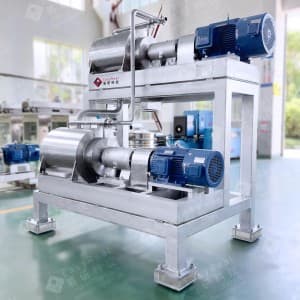
The EasyReal Fruit Pulper Machine utilizes a high-speed rotating paddle and mesh screening system to disintegrate fruit tissues and extract smooth pulp while separating undesirable components like seeds, skins, or fiber clumps. The machine’s modular design allows for single-stage or double-stage configurations, ensuring adaptability to different product requirements.
Constructed entirely of food-grade SUS 304 or 316L stainless steel, the unit features interchangeable screens (0.4–2.0 mm), adjustable rotor speeds, and tool-free disassembly for cleaning. Output capacity ranges from 500 kg/h to over 10 tons/h, depending on model size and material type.
Key technical advantages include:
-
High pulp yield (>90% recovery rate)
-
Adjustable fineness and texture
-
Continuous operation with low energy consumption
-
Gentle processing to retain flavor and nutrients
-
Suitable for both hot and cold pulping processes
This machine is widely integrated into fruit puree lines, baby food plants, tomato paste factories, and juice preprocessing stations — ensuring consistent product quality and operational reliability.
The Fruit Pulper Machine is suitable for an extensive range of fruit and vegetable processing applications, including:
-
Tomato paste, sauce, and puree
-
Mango pulp, puree, and baby food
-
Banana puree and jam base
-
Apple sauce and cloudy juice production
-
Berry pulp for jam or concentrate
-
Peach and apricot puree for baking
-
Mixed fruit bases for beverages or smoothies
-
Filling for bakery, desserts, and dairy blends
In many processing plants, the pulper serves as the core unit following crushing or preheating, enabling smooth downstream operations like enzymatic treatment, concentration, or UHT sterilization. The machine is particularly important when processing fibrous or sticky fruits where precise separation is needed to meet product texture standards.
Extracting high-quality pulp is not as simple as mashing fruit — different raw materials require unique handling due to their viscosity, fiber content, and structural toughness.
Examples:
-
Mango: fibrous with large central stone — needs pre-crusher and double-stage pulping
-
Tomato: high moisture with seeds — requires fine mesh pulping + decanter
-
Banana: high starch content — needs slow-speed pulping to avoid gelatinization
-
Apple: firm texture — often needs pre-heating to soften before pulping
Challenges include:
-
Avoiding screen clogging during continuous operation
-
Minimizing pulp loss while ensuring seed/skin removal
-
Retaining aroma and nutrients during hot pulping
-
Preventing oxidation and foaming in sensitive materials
EasyReal designs its pulping machines with adaptable rotors, multiple screen options, and variable-speed motors to overcome these processing complexities — helping producers achieve high yield, uniform consistency, and optimized downstream flow.
Fruit pulp is rich in fiber, natural sugars, and vitamins — making it a critical ingredient in nutritious foods like baby purees, smoothies, and health-oriented juices. For example, mango pulp delivers high β-carotene and vitamin A content, while banana puree offers potassium and resistant starch beneficial for digestion.
The pulping process also determines the final product’s texture, mouthfeel, and functional stability. Depending on market needs, fruit pulp can be used as:
-
Direct juice base (cloudy, fiber-rich drinks)
-
Precursor for pasteurization and aseptic filling
-
Ingredient in fermented beverages (e.g., kombucha)
-
Semi-finished pulp for export or secondary blending
-
Base for jam, jelly, sauces, or fruit yogurt
EasyReal’s machine enables producers to switch between these applications with interchangeable screens, process parameter adjustments, and hygienic product discharge — ensuring premium pulp quality across all segments.
Choosing the right pulper configuration depends on:
Production Capacity
Options from 0.5 T/h (small batch) to 20 T/h (industrial lines). Consider upstream crushing and downstream holding tank capacities to match throughput.
End Product Type
-
Fine pulp for baby food → double-stage pulper + 0.4 mm screen
-
Juice base → single-stage pulper + 0.7 mm screen
-
Jam base → coarse screen + slower speed to retain texture
⚙ Raw Material Characteristics
-
High fiber fruits → reinforced rotor, wide blades
-
Acidic fruits → use of 316L stainless steel
-
Sticky or oxidizing fruits → short residence time and inert gas protection (optional)
Hygiene & Maintenance Needs
Quick disassembly, auto-CIP compatibility, and open-frame structure for visual inspection are key for facilities with frequent product changeovers.
Our technical team provides layout suggestions and mesh recommendations for each specific fruit type to ensure optimal match between machine and process.
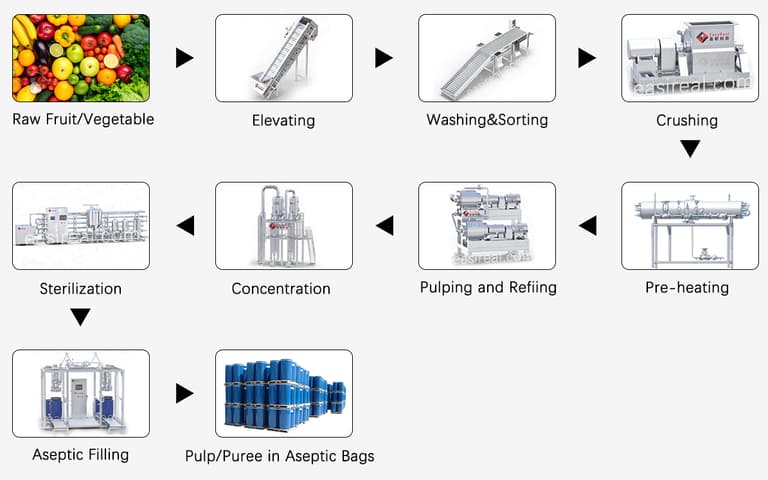
A typical pulping process in a fruit processing line follows these steps:
-
Fruit Receiving and Sorting
Raw fruits are visually and mechanically sorted for defects or size irregularities. -
Washing and Brushing
High-pressure washer units remove soil, pesticides, and foreign matter. -
Crushing or Pre-heating
For large fruits like mango or apple, a crusher or preheater softens the raw material and breaks down structure. -
Feeding to Pulper Machine
The crushed or pretreated fruit is pumped into the pulper hopper with flow rate control. -
Pulp Extraction
Rotor blades push the material through stainless steel mesh, separating seeds, peel, and fibrous matter. Output is smooth pulp with predefined consistency. -
Secondary Pulping (Optional)
For higher yield or finer texture, pulp passes to a second-stage unit with a finer screen. -
Pulp Collection and Buffering
Pulp is stored in jacketed buffer tanks for downstream processes (pasteurization, evaporation, filling, etc.) -
Cleaning Cycle
After batch completion, the machine is cleaned using CIP or manual rinsing, with full screen and rotor access.
In a complete fruit puree production line, the Fruit Pulper Machine works alongside several critical upstream and downstream units. Below is a detailed breakdown of the core equipment:
Fruit Crusher / Pre-Breaker
Installed before the pulper, this unit uses blades or toothed rollers to break down whole fruits like tomato, mango, or apple. Pre-crushing reduces particle size, enhancing pulping efficiency and yield. Models include adjustable gap settings and frequency-controlled motors.
Single/Double-Stage Pulper
EasyReal offers single-stage and double-stage configurations. The first stage uses a coarse screen to remove skin and seeds; the second stage refines the pulp using a finer mesh. Double-stage setups are ideal for fibrous fruits like mango or kiwi.
Interchangeable Screens (0.4–2.0 mm)
At the heart of the machine is the stainless-steel mesh system. Users can swap mesh sizes to adjust pulp fineness — ideal for different end products such as baby food, jam, or beverage base.
High-Speed Rotor + Paddle Assembly
Powered by a variable-speed motor, high-speed paddles push and shear the fruit through the screen. Blade shapes vary (curved or straight) to suit different fruit textures. All components are made from wear-resistant stainless steel.
Open-Frame Base Design
The unit features an open stainless-steel frame for easy visual inspection and hygienic cleaning. Bottom drainage and optional caster wheels allow mobility and convenient maintenance.
Discharge & Residue Port
Pulp exits centrally via gravity, while seeds and skins are discharged laterally. Some models support connection to screw conveyors or solid-liquid separation units.
These designs make EasyReal’s pulper superior to conventional systems in stability, adaptability, and cleanability, and they are widely applied in tomato, mango, kiwi, and mixed-fruit puree lines.
EasyReal’s Fruit Pulper Machine is highly versatile, designed to handle a broad range of fruit types and adapt to diverse product requirements:
Compatible Raw Materials
-
Soft fruits: banana, papaya, strawberry, peach
-
Firm fruits: apple, pear (requires preheating)
-
Sticky or starchy: mango, guava, jujube
-
Seeded fruits: tomato, kiwi, passion fruit
-
Berries with skins: grape, blueberry (used with coarse mesh)
Product Output Options
-
Coarse puree: for jam, sauces, and bakery fillings
-
Fine puree: for baby food, yogurt blends, and export
-
Mixed purees: banana + strawberry, tomato + carrot
-
Intermediate pulp: for further concentration or sterilization
Users can switch easily between products by changing mesh screens, adjusting rotor speed, and adapting feeding methods — maximizing ROI through multi-product capability.
Whether you're launching a fruit puree brand or expanding industrial processing capacity, EasyReal delivers complete solutions for fruit pulp extraction — from raw fruit to packaged final product.
We provide end-to-end design including:
-
Technical consultation and machine selection
-
Customized 2D/3D layout plans and process diagrams
-
Factory-tested equipment with rapid on-site installation
-
Operator training and multilingual user manuals
-
Global after-sales support and spare parts guarantee
Contact EasyReal Machinery today to request your project proposal, machine specifications, and quotation. We help you unlock the full potential of fruit processing — with industrial precision, flexible upgrades, and sustainable efficiency.