
China — January 2025 — Shanghai EasyReal Machinery Co., Ltd. supplied a Lab UHT/HTST Plant for Dongguan Jinbao Food Co., Ltd. / A&W Food Service in China. This pilot-scale system is designed for fluid food trials, thermal process testing, and formulation development, helping the customer carry out product research in a more controlled, flexible, and efficient way.
The system supplied for this project includes a Pilot Tubular Sterilizer, Inline Vacuum Deaerator, Inline Homogenizer, Aseptic Filling Cabinet, and related utility modules. It is a compact but highly functional R&D platform for evaluating product behavior under UHT and HTST conditions, optimizing process parameters, and supporting new product development for different categories of liquid and semi-liquid foods.
Unlike a full industrial production line, a lab UHT/HTST plant focuses on small-batch testing with industrially relevant processing logic. This allows the customer to study product performance before scale-up, reduce trial risk, improve formulation efficiency, and shorten development cycles.
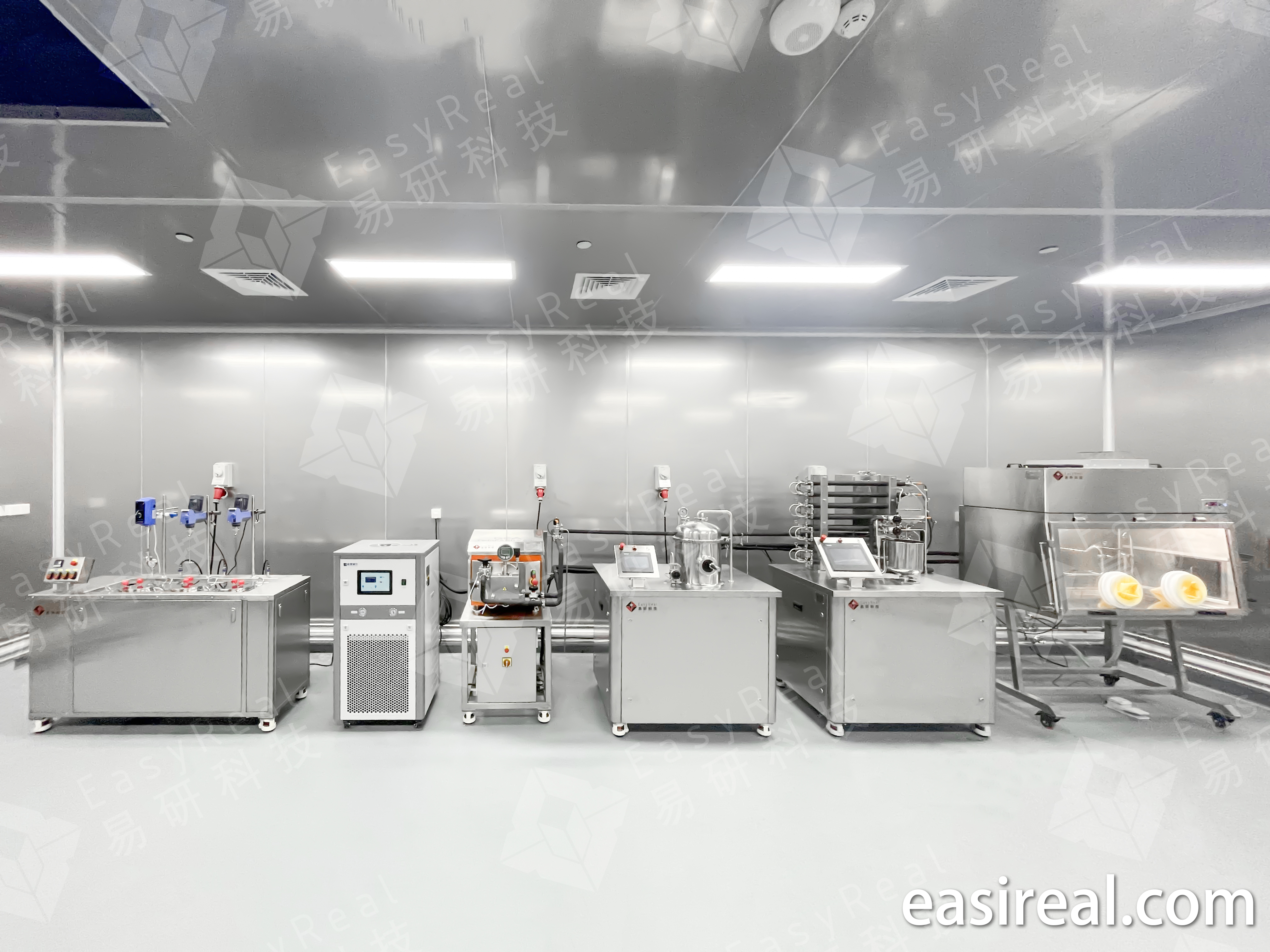
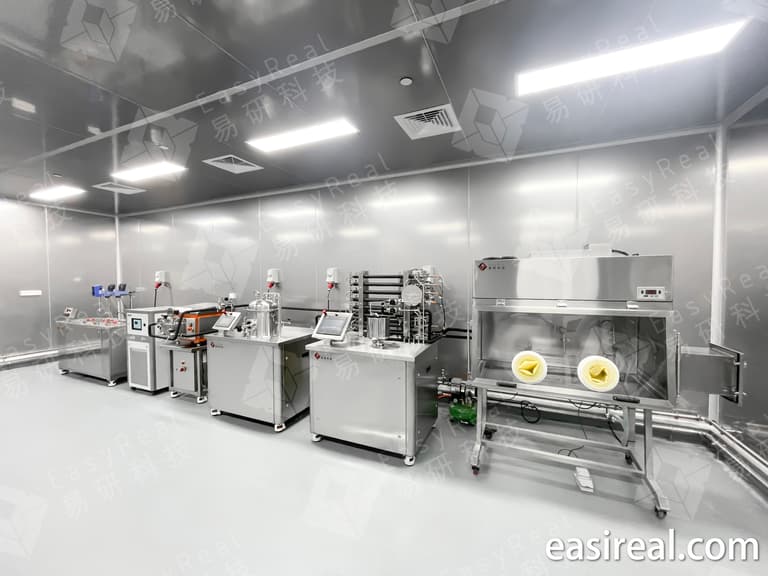
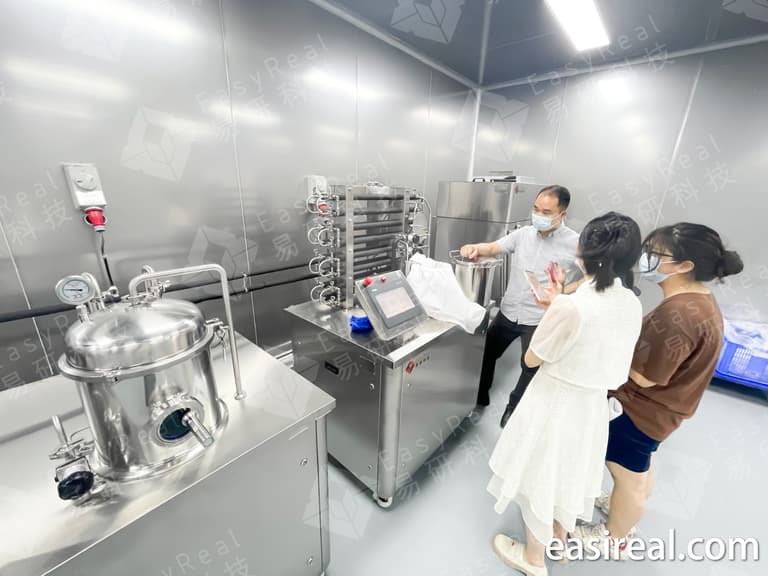
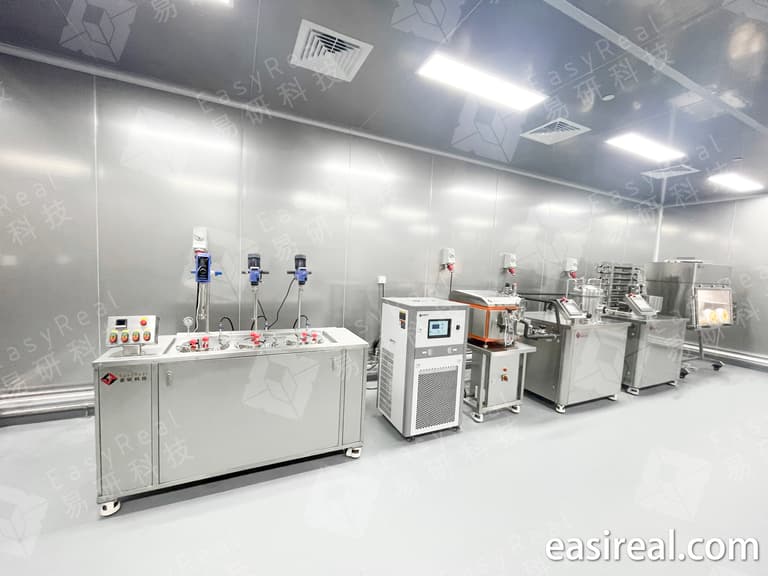
Customer: Dongguan Jinbao Food Co., Ltd. / A&W Food Service
Country: China
Project year: January 2025
Project type: Lab UHT/HTST Plant
Main use: R&D and formulation development for fluid foods
Core modules:
• Pilot Tubular Sterilizer
• Inline Vacuum Deaerator
• Inline Homogenizer
• Aseptic Filling Cabinet
• Utility modules
This project was designed for a real product development environment where different liquid food formulations need to be tested under precise heat treatment and process control conditions.
In fluid food development, laboratory research alone is often not enough. Bench-top tests can help with basic formulation screening, but they usually cannot fully simulate the real thermal process, pressure conditions, flow behavior, deaeration, homogenization, and aseptic filling steps used in commercial production.
That is where a Lab UHT/HTST Plant becomes especially valuable.
A pilot-scale system like this helps bridge the gap between laboratory experiments and industrial manufacturing. It allows the customer to:
• test thermal treatment conditions in a realistic process flow
• study product stability before scale-up
• evaluate homogenization effects on texture and mouthfeel
• reduce air content through vacuum deaeration
• perform aseptic filling trials
• compare different process settings during R&D
• improve product consistency before industrial launch
For companies developing fluid food products, this kind of equipment is not only a testing tool. It is also a decision-making tool.
This project includes several key modules that work together as one integrated pilot system.
Pilot Tubular Sterilizer
The pilot tubular sterilizer is the core thermal treatment section of the system. It allows the customer to carry out UHT process trials and HTST testing under controlled conditions.
This is important for studying how different products respond to heat. During product development, heat treatment affects many factors, such as:
- microbial safety
- flavor retention
- color change
- viscosity
- product stability
- shelf life potential
By using a pilot tubular sterilizer, the customer can test and optimize these factors before moving to a larger-scale system.
Inline Vacuum Deaerator
The inline vacuum deaerator removes unwanted air from the product stream. This function is especially useful for fluid foods that are sensitive to air incorporation during processing.
Deaeration can help improve:
- product appearance
- filling stability
- oxidation control
- flavor protection
- downstream homogenization performance
For some formulations, vacuum deaeration is a very practical step in improving final product quality.
Inline Homogenizer
The inline homogenizer is another key feature of this project. It can achieve both:
- upstream inline homogenization
- aseptic downstream inline homogenization
This gives the system stronger process flexibility.
In product development, homogenization is often used to improve:
- particle size distribution
- suspension stability
- mouthfeel
- emulsion quality
- visual uniformity
The ability to use the homogenizer in different positions within the process is an important advantage for R&D work, because it allows the customer to compare different processing paths and optimize product performance.
Aseptic Filling Cabinet
The aseptic filling cabinet supports small-batch filling under controlled hygienic conditions. This makes it possible to collect samples after thermal treatment and other process steps in a way that is more relevant to real aseptic product development.
For pilot testing, aseptic filling is important because it allows the customer to:
- prepare trial batches for evaluation
- perform storage studies
- assess packaging compatibility
- support shelf life observation
- verify process results after heat treatment
Utilities
The utility section supports stable operation of the whole pilot system. Reliable utilities are essential for accurate testing, repeatable results, and controlled processing conditions.
This lab UHT/HTST plant is designed for more than simple heating tests. It creates a small but realistic process platform for product development.
With this system, the customer can carry out:
• UHT and HTST process simulation
• formulation validation for fluid foods
• homogenization trials under different settings
• deaeration tests for sensitive products
• aseptic filling evaluation
• product stability comparison
• process parameter optimization
• pilot-scale sample preparation for internal review or customer testing
This makes the equipment especially useful for companies that need a reliable R&D platform rather than only a simple lab machine.
According to the project purpose you provided, the system is mainly used for all kinds of fluid food experiments and formulation development.
This means the plant can serve a wide range of product directions, such as:
• dairy beverages
• plant-based beverages
• protein drinks
• liquid nutritional products
• tea and coffee beverages
• sauce-like fluid products
• other pumpable liquid food systems
The exact application depends on the customer’s product portfolio, but the value of the system lies in its flexibility. Instead of being limited to one specific formula, it can support multiple liquid food development projects.
For A&W Food Service, this project creates an internal pilot platform for product innovation and process evaluation.
The main value of the system includes:
1. Faster Product Development
The customer can test formulations in-house instead of relying only on external trials or large-scale production testing.
2. Better Process Understanding
The system helps the customer study how products respond to heating, deaeration, homogenization, and aseptic filling.
3. Lower Scale-Up Risk
Pilot testing reduces uncertainty before moving to industrial manufacturing.
4. More Flexible R&D
Different process routes can be compared more easily, especially with the homogenizer’s flexible configuration.
5. More Reliable Trial Samples
The aseptic filling cabinet helps produce better trial samples for evaluation and storage testing.
For companies that value product quality, development speed, and process control, a lab UHT/HTST plant can become a long-term R&D asset rather than a one-time equipment purchase.
EasyReal has strong experience in both pilot-scale food processing systems and industrial processing equipment, which is important for this kind of project. A good pilot system should not be isolated from industrial reality. It should reflect practical processing logic and create meaningful test results for future scale-up.
This project combines key modules in one integrated structure:
• thermal treatment
• deaeration
• homogenization
• aseptic filling
• utilities
That integration makes the platform more useful for serious product development work.
Post time: Dec-02-2025